




















A custom website vs template decision comes down to one thing: how much your business depends on the site. A template or website builder gets you online fast and cheap using a pre-made design. A custom website is built around your business — so it converts better, ranks on Google, and scales without hitting a wall.
Most small projects start on a template and that's fine. The question is when "fast and cheap" quietly becomes "stuck and slow" — and what it costs to switch.
What's the difference?
- Template / website builder: a pre-built design (Wix, Squarespace, a WordPress theme) you fill with your content. Cheap, fast to launch, shared by thousands of other sites, and limited to what the platform allows.
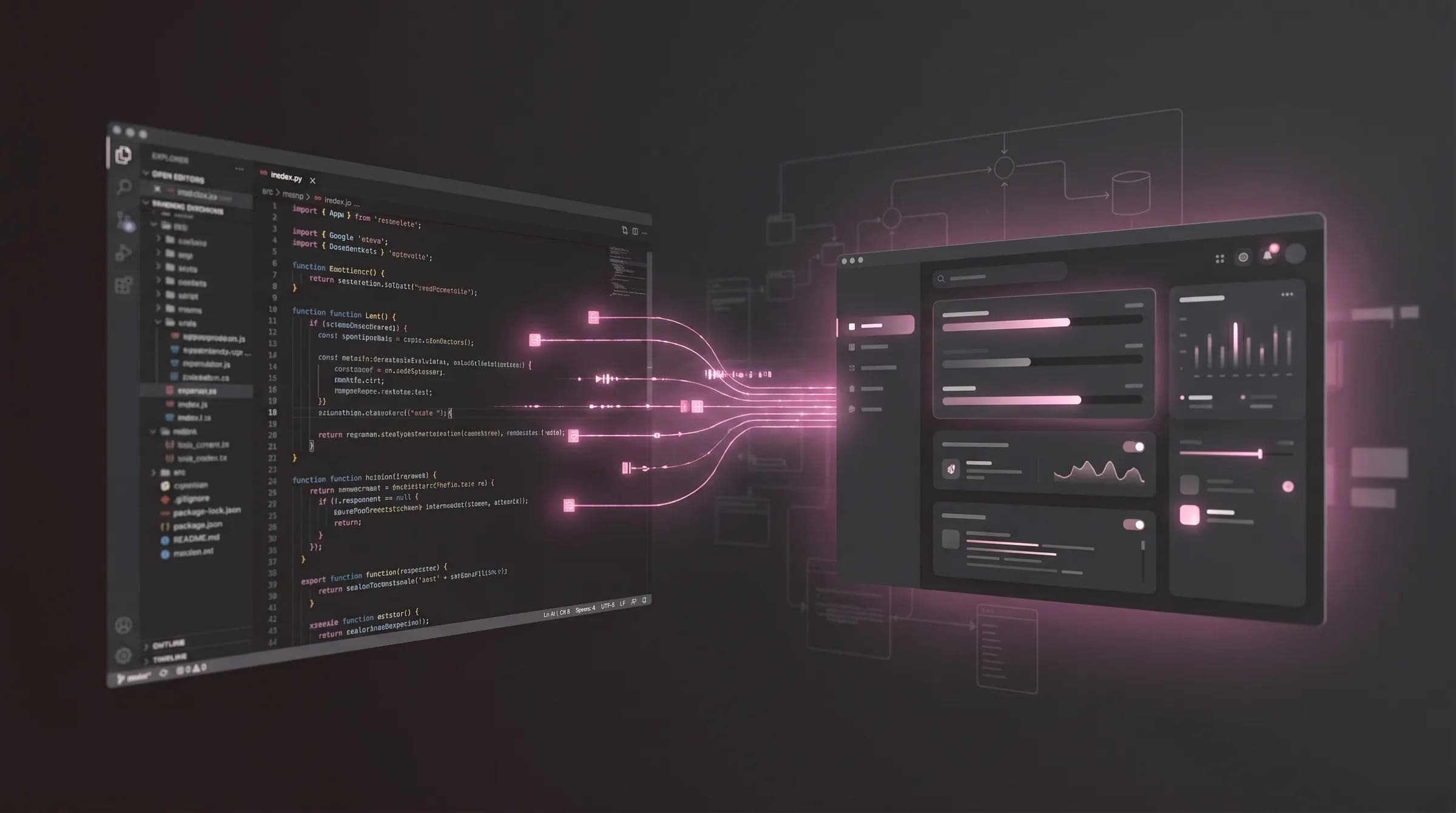
- Custom website: designed and coded around your brand, content, and goals. Higher upfront cost, but it fits your business exactly, performs better, and the code is yours.
- Hybrid (custom on a CMS): a custom design built on WordPress or a headless CMS — the flexibility of custom with an editing experience your team controls.
Custom website vs template: the real comparison
The monthly subscription is the number on the pricing page. The real cost is what the site can — and can't — do once your business leans on it.
| Custom website | Template / website builder | |
|---|---|---|
| Upfront cost | Higher | Lowest |
| Time to launch | Weeks | Days |
| Design fit to brand | Exact | Generic / shared |
| Site speed & performance | Optimized | Often bloated |
| SEO control | Full | Limited |
| Integrations & custom features | Anything | Platform-limited |
| You own the code | Yes | No — you rent it |
| Scales as you grow | Yes | Hits a ceiling |
Templates win on price and speed. Custom wins on fit, performance, ownership, and headroom. Neither is "better" in the abstract — it depends on what the site has to do.
Template / builder
- lowest upfront cost, live in days
- generic design shared across sites
- often bloated, limited SEO control
- platform-limited features
- you rent it — no clean export
Custom website
- built around your brand and funnel
- optimized speed and full SEO control
- any integration or custom feature
- scales as you grow
- you own the code outright
When a template or builder is the right call
A builder is the smart choice when:
- You need a simple brochure or landing page live this week.
- Budget is tight and the site isn't your main revenue channel.
- You'll edit it yourself and don't need custom features or integrations.
- You're validating an idea and want to move before committing.
There's no shame in a template — for the right job, it's the efficient answer.
When a custom website pays off
Go custom when the website is doing real work:
- It has to convert. A site built around your funnel and customers outperforms a generic theme.
- It has to be found. Custom builds give you full control of speed, structure, and technical SEO — which is exactly why our web development service ships every site built to rank from day one, not bolted on later.
- It has to integrate. Custom CRM, payments, dashboards, or web-app features that builders can't touch.
- It has to scale. A custom site grows with your business instead of hitting the platform's ceiling.
This is the same wedge behind every custom build we ship from Monterrey: a US-quality site, hand-built for your business, that you own outright.
The ownership trap most builders hide
With a website builder, you typically own your content and domain — but the platform owns the code and hosting. You're renting your own website, locked into a monthly subscription, with no clean way to export. The day you outgrow the platform, you rebuild from scratch.
A custom website flips that: you own the code, the design, and the CMS. No lock-in, no rented platform, no surprise migration tax later.
Custom doesn't have to mean expensive
The usual objection to custom is cost — and against a US agency, it's fair. But nearshore changes the math. A senior team in Mexico builds the same US-quality custom website at a fraction of US agency rates, on your time zone, in English. That's how a custom site becomes affordable enough to choose over a template for any business that's serious about its website.
The bottom line
Choose on how much your business depends on the site. If it's a simple page and budget is tight, a template or builder gets you live today. If the site has to convert, rank, integrate, and scale — and you want to own what you build — a custom website wins, and nearshore makes it affordable. Most businesses start on a template and move to custom the moment the website starts carrying real weight.