













ERP implementation is the structured process of moving a business onto a new ERP system, and it runs through six core phases: discovery and planning, design and configuration, build and integration, data migration, testing, and training and go-live — followed by ongoing support and optimization. Each phase ends in a deliverable you sign off before the next begins.
That sequence is the difference between an ERP that ships and one that stalls. The software rarely fails on its own — the process around it does. This guide walks each of the ERP implementation phases for US and nearshore teams, what each one produces, and where projects quietly go off the rails. Treat it as your ERP implementation plan: the phases are the steps, and the process is what keeps each one from slipping.
The ERP implementation steps and phases at a glance
Every credible methodology — vendor or consultant — maps to the same backbone. Here's the full sequence, what each phase delivers, and roughly how long it takes on a mid-market project.
- Discovery and planning — map as-is processes, lock scope, budget, and the project team.
- Design and configuration — design to-be processes; adapt the process to the system, customize sparingly.
- Build and integration — finalize configuration, build approved customizations, wire the integrations.
- Data migration — profile, cleanse, map, then load and validate legacy data early.
- Testing — unit, integration, and UAT with real users; nothing ships without sign-off.
- Training and go-live — train on real workflows, pick the cutover, plan hypercare.
| Phase | What it delivers | Typical duration |
|---|---|---|
| 1. Discovery & planning | Scope, requirements, budget, project team | 3–6 weeks |
| 2. Design & configuration | To-be process maps, system configuration | 4–8 weeks |
| 3. Build & integration | Configured system, customizations, integrations | 6–12 weeks |
| 4. Data migration | Cleaned, mapped, validated data in the new system | 3–8 weeks (overlaps) |
| 5. Testing | UAT sign-off, fixed defects, performance checks | 3–6 weeks |
| 6. Training & go-live | Trained users, cutover, hypercare | 2–4 weeks + go-live |
| Support & optimize | Stabilization, adoption, continuous improvement | Ongoing |
Durations overlap in practice — data migration and testing in particular run alongside the build. The point isn't the calendar; it's that no phase gets skipped. Whether you call them ERP implementation phases or ERP implementation steps, the sequence is the same — and following it in order is the implementation process.
Phase 1 — Discovery and planning
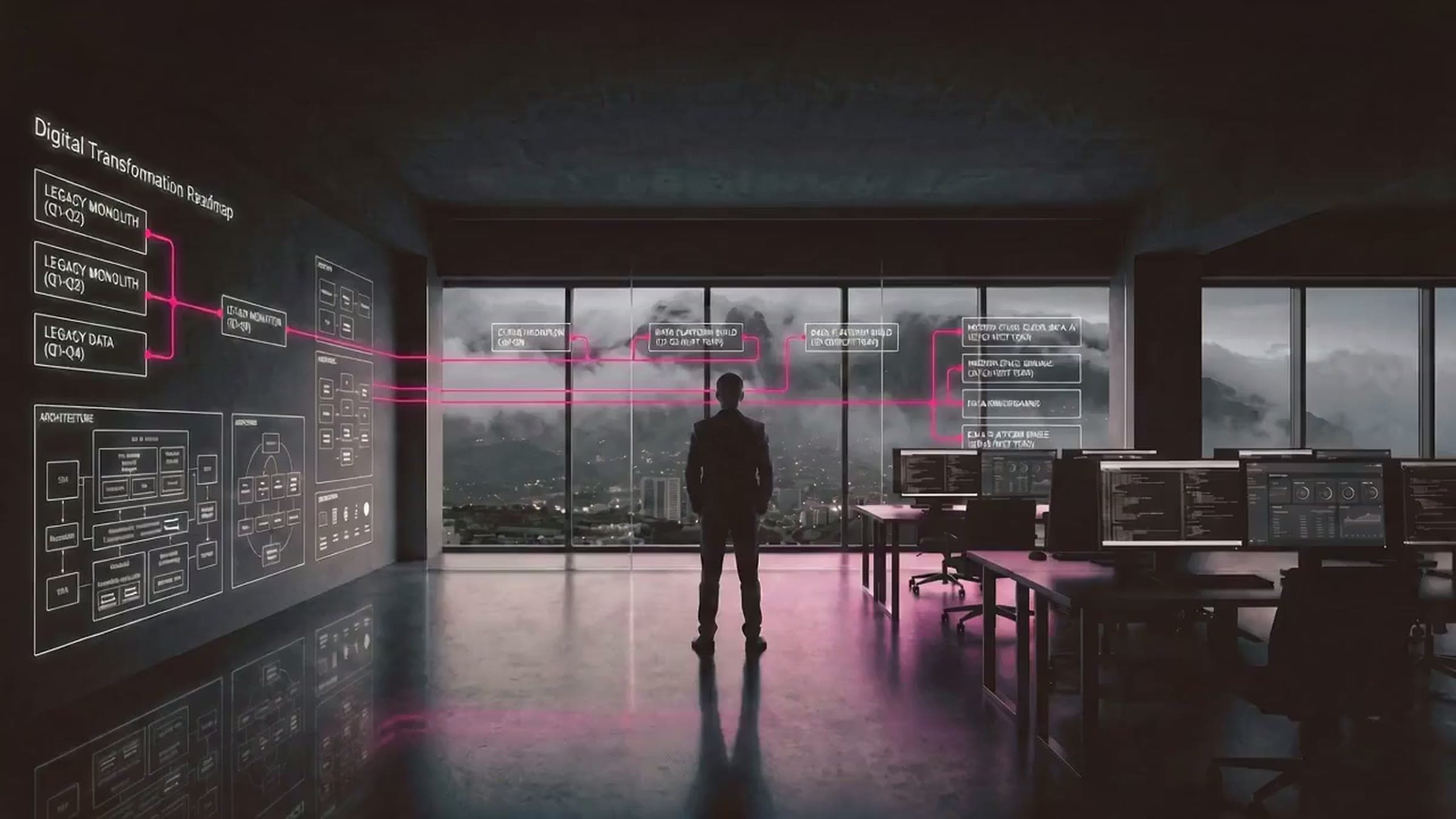
This is where ERP projects are won or lost. You map current ("as-is") processes, define the business outcomes the system must deliver, lock scope and budget, and assemble a team with a real executive sponsor. The deliverable is a requirements document and project plan everyone signs.
Skip the rigor here and you inherit the classic failure pattern: vague scope, shifting requirements, and a budget that doubles by phase three. The job in this phase is to decide what the business actually needs — not the most expensive or most complex option, the right-fit one.
Phase 2 — Design and configuration
With requirements set, you design the "to-be" processes and configure the ERP to match them. This is the moment to resist over-customization: every line of custom code is a future upgrade you have to pay for twice. The strong default is to adapt the process to the system, customizing only where it creates real competitive advantage.
The deliverable is a configured environment and approved to-be process maps. Sign-off here keeps the build phase from becoming a moving target.
Phase 3 — Build and integration
Now the system gets built out: configuration finalized, any approved customizations developed, and integrations wired to the tools that stay — CRM, e-commerce, payroll, warehouse, banking. Integrations are consistently underestimated, so scope them honestly in phase 1 rather than discovering them here.
Phase 4 — Data migration
Garbage in, garbage out — and bad data is one of the top reasons go-lives fail. This phase extracts data from legacy systems, cleans it, maps it to the new schema, and validates it with test loads before the real one.
A disciplined migration follows a clear sequence:
- Profile — audit legacy data for duplicates, gaps, and errors.
- Cleanse — fix or archive what's broken; don't migrate junk.
- Map — match old fields to new ERP structures.
- Load & validate — run trial migrations, reconcile record counts, sign off.
Start data work early. It's the phase most likely to blow a timeline if left until the end.
Phase 5 — Testing
Testing is where you find problems while they're cheap to fix. You run unit tests on configuration, integration tests across connected systems, and — most importantly — user acceptance testing (UAT), where real users run real scenarios. Performance and security checks happen here too. Nothing goes live until UAT is signed off; skipping testing to "save time" is how projects end up debugging in production.
Phase 6 — Training and go-live
Users who don't trust the system won't use it, and an unused ERP is a failed one. Train people on their actual workflows, not a generic demo, and identify power users who can support their teams.
Then you choose your cutover approach:
Big-bang go-live
- Best for smaller, lower-complexity rollouts
- Faster and cheaper to execute
- Higher risk — everything switches on one date
Phased go-live
- Best for multi-module, multi-site, complex orgs
- Lower risk — you learn between waves
- Longer, and runs parallel systems for a while
Whichever you pick, plan a hypercare window of intense post-launch support to catch issues fast.
Support, adoption, and continuous improvement
Go-live is the start, not the finish. The support phase stabilizes the system, drives adoption, and turns the ERP into a platform you keep improving. Increasingly that means connecting AI agents to your ERP data — supercharging analysis, quotations, and internal processes without a rip-and-replace. A modern ERP is a foundation that evolves, not a project that ends.
This full sequence — from discovery through evolution — is the backbone of our ERP implementation service, where a fixed-scope, phased method is built to de-risk exactly the failures above. Our nearshore consultants run it vendor-neutral, in your time zone, across NetSuite, SAP, Odoo, Dynamics, and Acumatica.
The bottom line
The ERP implementation phases aren't bureaucracy — they're guardrails. Discovery sets the scope, design keeps customization in check, migration protects your data, testing catches what would otherwise break in production, and training makes the system stick. Most ERP failures trace back to a phase that was rushed or skipped. Run the sequence with a sign-off at each gate and you turn a high-stakes project into a predictable one.