




















Automation and AI get used interchangeably, but they solve different problems. Automation follows a fixed set of rules you wrote — if this, then that — and executes them the same way every time. AI makes judgment calls on messy, unstructured input — text, images, speech — choosing what to do instead of following a script. Intelligent automation combines the two: AI handles the decisions, automation handles the deterministic steps around them.
That distinction is the whole story. Automation is predictable and cheap but brittle. AI is flexible but needs guardrails. Most real business value comes from knowing which one a task actually needs — and when to combine them.
What "automation" actually means
Automation is the older, more boring, and more reliable of the two. You define a sequence of steps in advance, and software runs them without a human. A nightly job that copies orders from your store into your accounting system. An RPA bot that logs into a legacy portal, reads three fields, and types them into another screen. A Zapier-style flow that posts to Slack when a deal closes.
The defining trait: the logic is fixed and deterministic. Given the same input, automation produces the same output every time. That makes it predictable, auditable, and cheap to run — and it also means it breaks the moment reality drifts from the script. An RPA bot built for one invoice layout fails when the vendor changes the layout. The rules don't bend; they snap.
Automation is brilliant when the steps never change and the input is already clean and structured. It's the wrong tool the moment a task needs interpretation.
What AI adds: perception and judgment
AI is the layer that handles the inputs no one could script for. Where automation needs structured data and fixed rules, AI works on unstructured input — a PDF in any layout, a customer email written in plain English, a photo of a damaged part, a voice note. It perceives, classifies, and makes a judgment call.
A few concrete examples:
- Reading 40 different invoice layouts and pulling the totals — without a template for each one.
- Routing a support ticket by what the customer actually means, not just keywords.
- Flagging a contract clause that looks non-standard.
- Summarizing a 30-page report into five bullets.
The trade-off: AI is probabilistic, not deterministic. It can be wrong, it can hallucinate, and the same input won't always produce the identical output. That flexibility is exactly why it handles cases automation can't — and exactly why it needs review, guardrails, and a human checkpoint where the stakes are high.
AI vs automation vs intelligent automation, side by side
The fastest way to see the difference is to line them up:
Automation
- Decides by fixed rules you wrote
- Needs structured, clean data
- Breaks on edge cases
- Fully deterministic
- Best for repetitive, stable tasks
AI
- Decides by judgment on what it perceives
- Reads unstructured text, images, speech
- Adapts to new cases
- Probabilistic — can vary or err
- Best for interpretation and judgment
Intelligent automation
- AI decides, rules execute
- Messy in, structured out
- AI absorbs the variation
- Bounded by guardrails
- Best for end-to-end processes
The pattern: automation executes, AI decides, and intelligent automation does both inside one workflow.
Where each one wins
Automation wins when the work is repetitive, the steps are stable, and the input is already structured. Moving records between systems, generating templated documents, reconciling two clean datasets, triggering notifications. It's cheaper, faster, fully predictable, and far easier to audit than anything with a model in it. If a rules engine can do the job, use a rules engine.
AI wins when the task requires interpreting unstructured input or making a call no one scripted for. Document understanding, classification, language, image recognition, drafting. Anything where the input is messy and the "right" answer depends on context.
The mistake we see most often in US operations teams is reaching for AI on a problem plain automation already solves — paying for a probabilistic system, and the review overhead that comes with it, where a deterministic one would have been cheaper and more reliable.
How they combine into intelligent automation
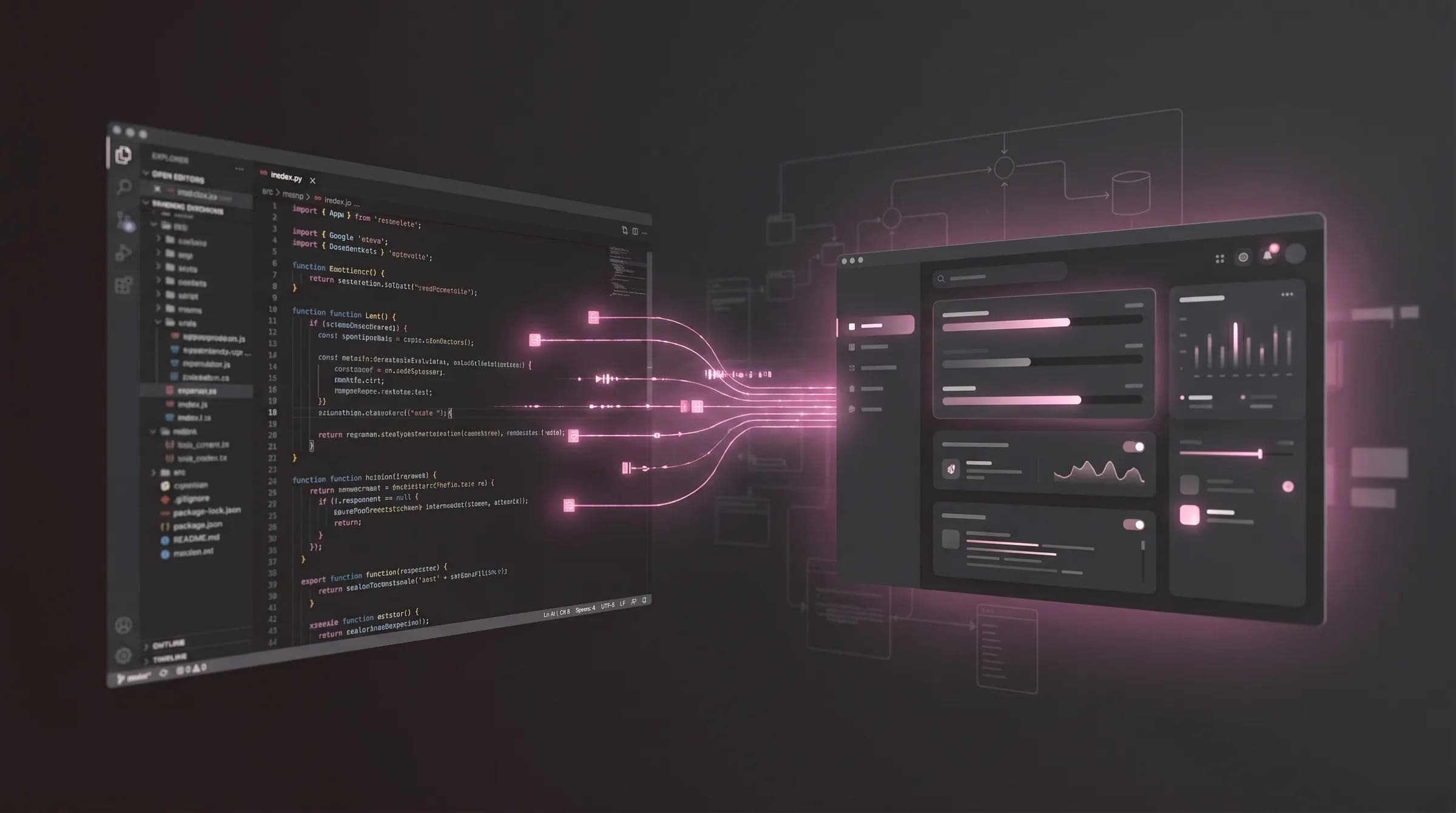
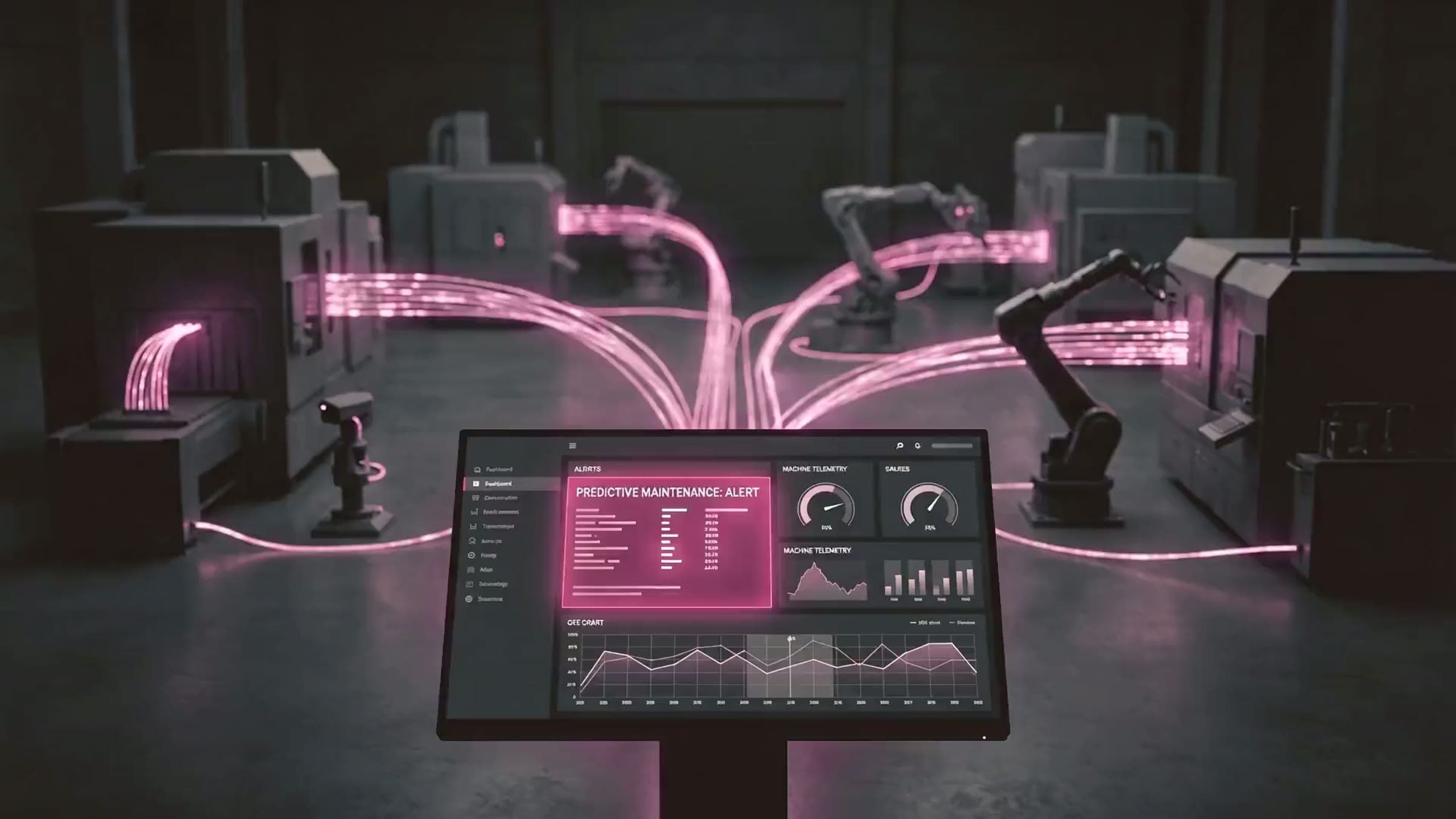
The interesting work happens when you stop treating it as AI vs automation and start treating it as AI plus automation. That's intelligent automation: AI handles the steps that need judgment, and traditional automation handles the deterministic plumbing around them.
Take invoice processing. Pure RPA breaks across vendor layouts. Pure AI can read any layout but shouldn't be trusted to write directly to your ledger unchecked. Combine them: AI reads each invoice — whatever the format — and extracts the fields; automation validates them against the PO, posts the clean record, and flags only the exceptions for a human. The AI absorbs the variation; the automation gives you the speed, structure, and audit trail.
That blend is the core of our AI automation work, and it's why "AI vs automation" is the wrong frame for most real projects — you almost always want both, with each doing the part it's good at. If you're scoping a specific process, our deeper guides on what AI automation is and AI business process automation walk through where the AI layer earns its keep.
How to choose
A quick decision path:
- Is the input structured and the logic fixed? Use automation. Don't add AI you'll have to monitor and pay for.
- Does a step need to interpret messy input or make a judgment call? That step needs AI.
- Is it a multi-step process with both kinds of work? That's intelligent automation — let AI handle the judgment and automation handle the rest.
Cost tracks complexity. A rules-based automation or RPA flow is cheap and quick to stand up. Adding AI raises the build cost and adds an ongoing tax: evaluation, monitoring, guardrails, and human review at the steps where being wrong is expensive. That tax is worth paying only where judgment is genuinely required — not as a default.
The bottom line
Don't ask whether AI or automation is "better" — they answer different questions. Automation executes fixed rules on clean input, fast and predictably. AI makes judgment calls on messy input, flexibly but probabilistically. The strongest systems are intelligent automation: AI for the decisions, automation for everything around them. Pick plain automation when the steps never change, add AI only where a task genuinely needs to interpret or decide, and combine them when a process needs both.