














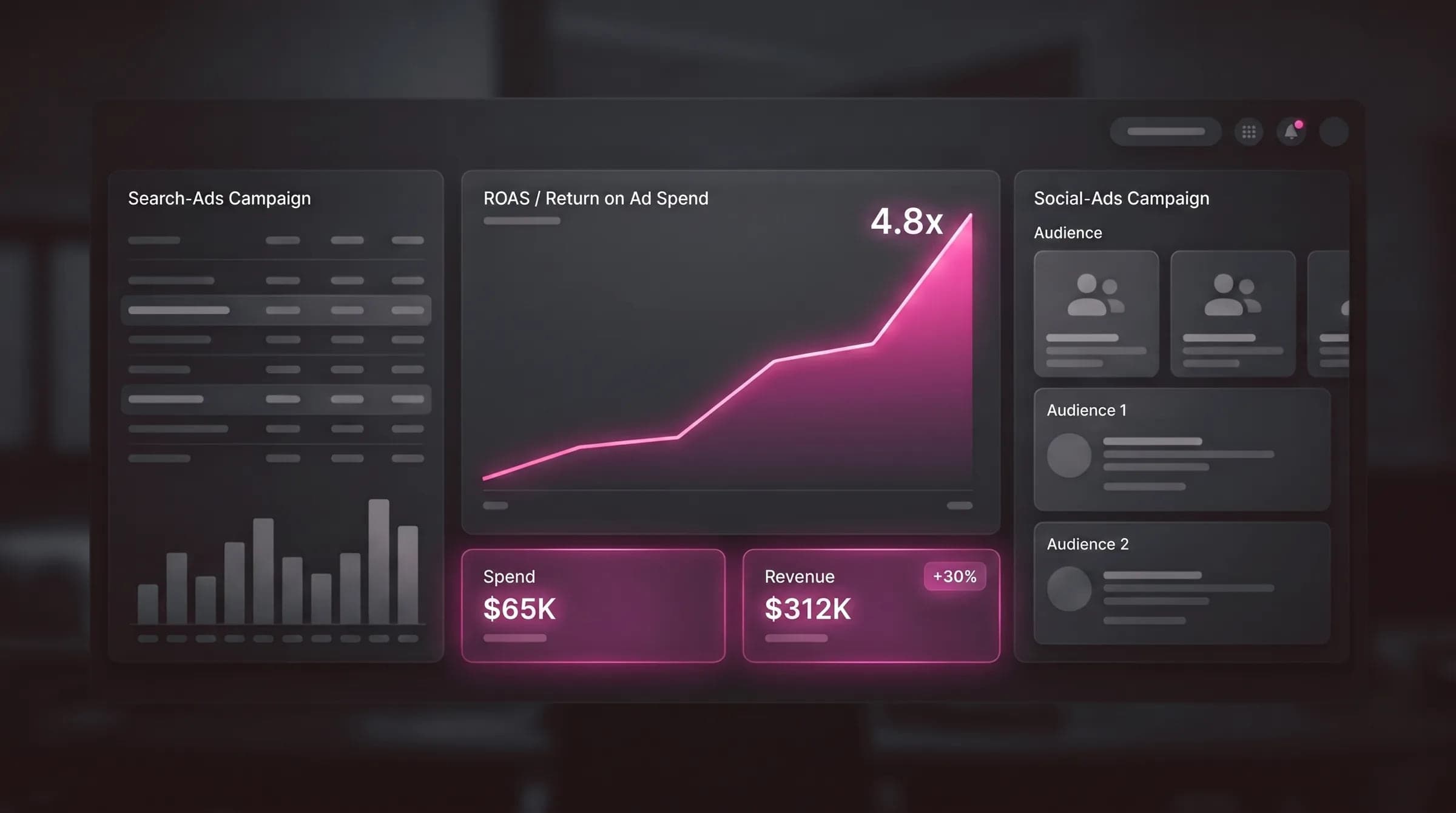






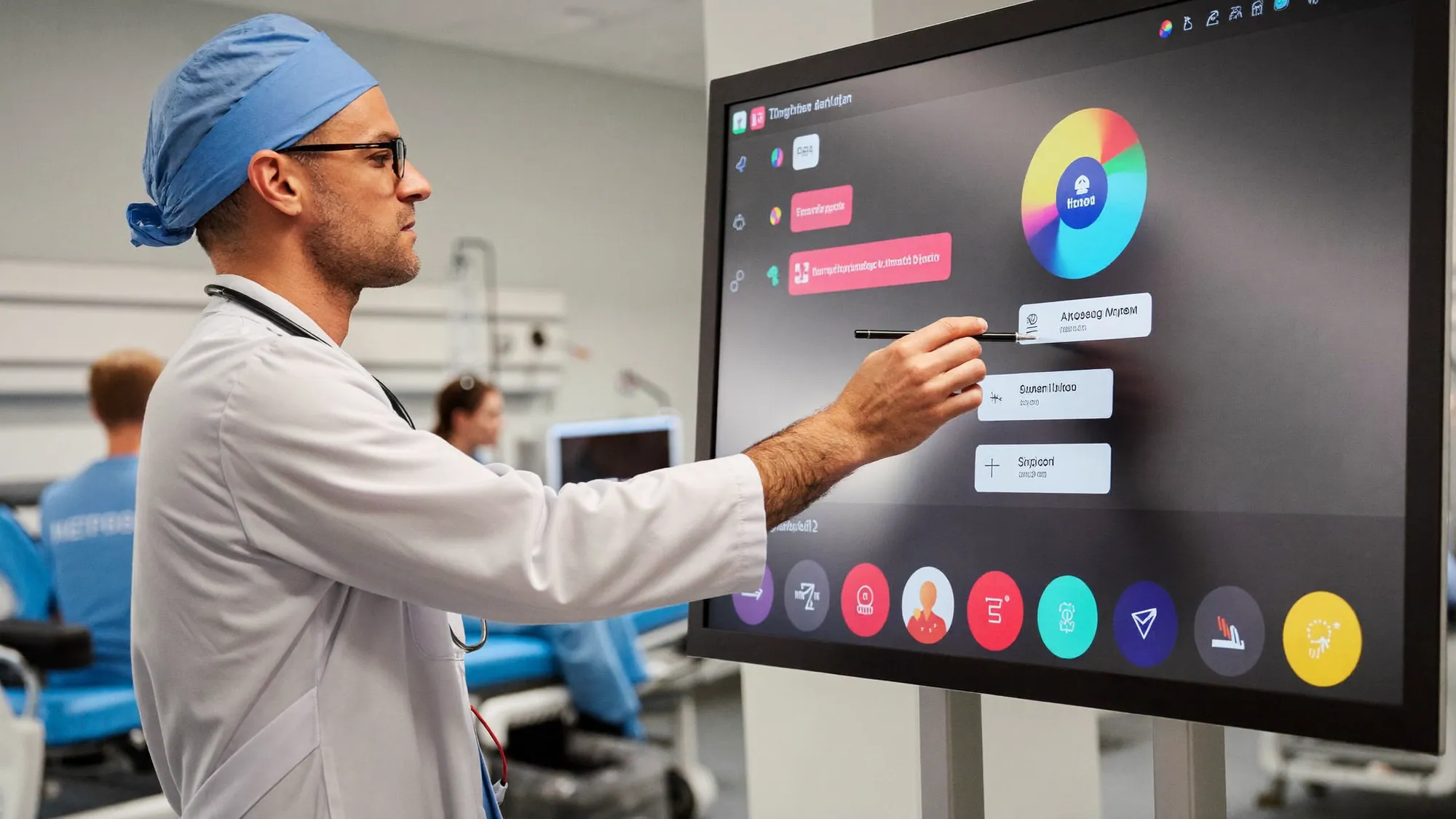
Healthcare data analytics is the practice of collecting, cleaning, and analyzing patient and operational data — from electronic health records, claims, labs, and devices — to drive better clinical and business decisions. It turns scattered records into measurable outcomes: lower readmissions, faster throughput, and lower cost per patient.
The hard part isn't the dashboard. It's getting messy, siloed healthcare data into one trustworthy place — and then building analytics people actually use to make a decision, not charts that nobody opens.
What is healthcare data analytics?
Healthcare data analytics spans the full path from raw record to decision: data engineering (pipelines and a warehouse that unify EHR, claims, lab, and device data), business intelligence (dashboards for clinical and operational metrics), and predictive and AI analytics (risk scoring, forecasting, anomaly detection). One team, the whole maturity ladder.
The opposite of useful analytics is the data swamp: dozens of source systems, inconsistent definitions of "patient" or "encounter," and reports nobody trusts. The first job of any serious healthcare data analytics effort is to fix the foundation so every number means the same thing to everyone.
The four types of healthcare data analytics
Healthcare analytics climbs a maturity ladder. Most organizations start at the bottom and move up as their data foundation hardens:
| Type | Question it answers | Healthcare example |
|---|---|---|
| Descriptive | What happened? | 30-day readmission rate by unit |
| Diagnostic | Why did it happen? | Which factors drive those readmissions |
| Predictive | What's likely next? | Patients at high risk of readmission |
| Prescriptive | What should we do? | Which intervention to trigger, for whom |
Descriptive reporting is table stakes. The value compounds as you climb toward predictive and prescriptive — but only if the underlying data is clean and governed. Skip the foundation and the predictions inherit the swamp.
Where the data comes from
A real healthcare analytics platform pulls from systems that rarely speak the same language:
- EHR / EMR — clinical encounters, diagnoses, medications, vitals
- Claims and billing — utilization, cost, payer mix
- Lab and imaging systems — results and turnaround times
- Devices and remote monitoring — vitals streams, wearables
- Scheduling and operations — capacity, no-shows, throughput
Unifying these is the data engineering work most projects underestimate. It's also where outcomes are won: once EHR, claims, and operational data sit in one governed warehouse, a single dashboard can finally show cost and quality and capacity side by side.
What outcomes look like
"Outcomes" isn't a slogan — it's the metric, the decision, and the owner. Good healthcare data analytics ties each report to a real action:

- Reduce readmissions — flag at-risk patients before discharge so care teams intervene.
- Cut wait times — surface bottlenecks in scheduling and ED throughput.
- Lower cost per case — expose variation in utilization and supply use.
- Improve population health — segment panels by risk to target outreach.
If a dashboard doesn't change a decision someone makes, it's reporting theater. Build for the action first, then the chart.
HIPAA, security, and compliance
In healthcare, compliance is a design constraint from day one. A compliant analytics build relies on encryption in transit and at rest, role-based access, full audit logging, de-identification where analysis allows, and a signed Business Associate Agreement with any partner that touches protected health information. You should also own your warehouse, your code, and your dashboards — no lock-in to a black-box platform that holds your patient data hostage.
Why nearshore for healthcare analytics
Healthcare analytics is collaborative, evolving, and touches sensitive core systems — exactly the work that suffers under a 10-hour time-zone gap. A nearshore team in Mexico runs your business hours, so a clinical analyst's question gets answered the same day, not tomorrow. From Monterrey, senior data engineers sit a short flight from US clients and align on HIPAA and US healthcare context far more easily than a distant offshore vendor.
That's the model behind our data and analytics service: end-to-end delivery — data engineering, BI dashboards, and predictive AI — built on a modern stack (Snowflake, BigQuery, dbt, Power BI, Tableau, Python) by senior nearshore engineers who build for the decision, not the dashboard. It's a flat-fee, you-own-your-data engagement — a sharper fit for US providers than an offshore shop in India or a Big-4 deck.
For the broader picture, see what data analytics means for a business and what data analytics services cost — the same maturity ladder and pricing logic apply once you add HIPAA to the mix.
The bottom line
Healthcare data analytics only pays off when it changes outcomes. That means fixing the data foundation first — unifying EHR, claims, and operational data — then building analytics tied to a real decision and a named owner, all under HIPAA-grade controls. Get the foundation and the ownership right, and patient data stops being a swamp and starts driving lower readmissions, lower cost, and better care.