


















Building a mobile app follows the same eight steps almost every time: validate the idea, scope a minimum version, pick how and who builds it, design the flows, build the frontend and backend, test on real devices, launch to the stores, then measure and iterate. The teams that ship do the early steps — validation and scope — before writing a line of production code.
Here's each step, concrete, in the order you actually do them.
- Validate the idea — confirm real people have the problem and test demand cheaply before any code.
- Define the MVP scope — cut to the smallest version that does the one core job; everything else waits.
- Choose the approach — native vs cross-platform app development, and who builds it (in-house, freelance, agency).
- Design the UX/UI — map the flows first, then the visuals, then a clickable prototype.
- Build — frontend, backend, and integrations, shipping a working slice of the core job first.
- Test and QA — functional checks plus real-device testing across platforms and screen sizes.
- Launch — clear the App Store and Google Play gates, then soft-launch to a small audience.
- Measure and iterate — instrument analytics, learn from real users, and ship updates in cycles.
1. Validate the idea and define the core problem
Before anything else, find the one problem your app solves and confirm real people have it. Talk to the people who'd use it. Look for a problem they already work around in clumsy ways — a spreadsheet, a group chat, a manual process. That friction is the signal.
Then test demand cheaply, before any code: a landing page that describes the app and collects sign-ups, a clickable prototype, or a "concierge" version where you deliver the value by hand to a handful of users. If a rough test can't get interest, more polish won't save it. The output of this step is a single sentence: who it's for and what one job it does for them.
2. Define the MVP scope (must-have vs later)
An MVP — minimum viable product — is the smallest version that delivers the core value and lets real users do the one job the app exists for. Everything else waits. The hardest discipline here is cutting features you're attached to, because scope is the single biggest lever on both cost and timeline.
Sort every idea into two buckets:
| Must-have (ship in the MVP) | Nice-to-later (after launch) | |
|---|---|---|
| Purpose | Delivers the core job | Adds convenience or breadth |
| Examples | Sign-up/login, the one core feature, basic profile | Social sharing, gamification, themes |
| Integrations | Only what the core job needs | Analytics extras, third-party add-ons |
| Platforms | One platform if budget is tight | The second platform |
| Test it against | "Can a user do the main job?" | "Would this make it stickier?" |
If a feature doesn't help a first user complete the core job, it's a "later." Write the must-have list down — it becomes the build scope and the yardstick for every "can we just add…" request that follows.
3. Choose the approach (native vs cross-platform, and who builds it)
Two decisions live here: the technical approach and the team.
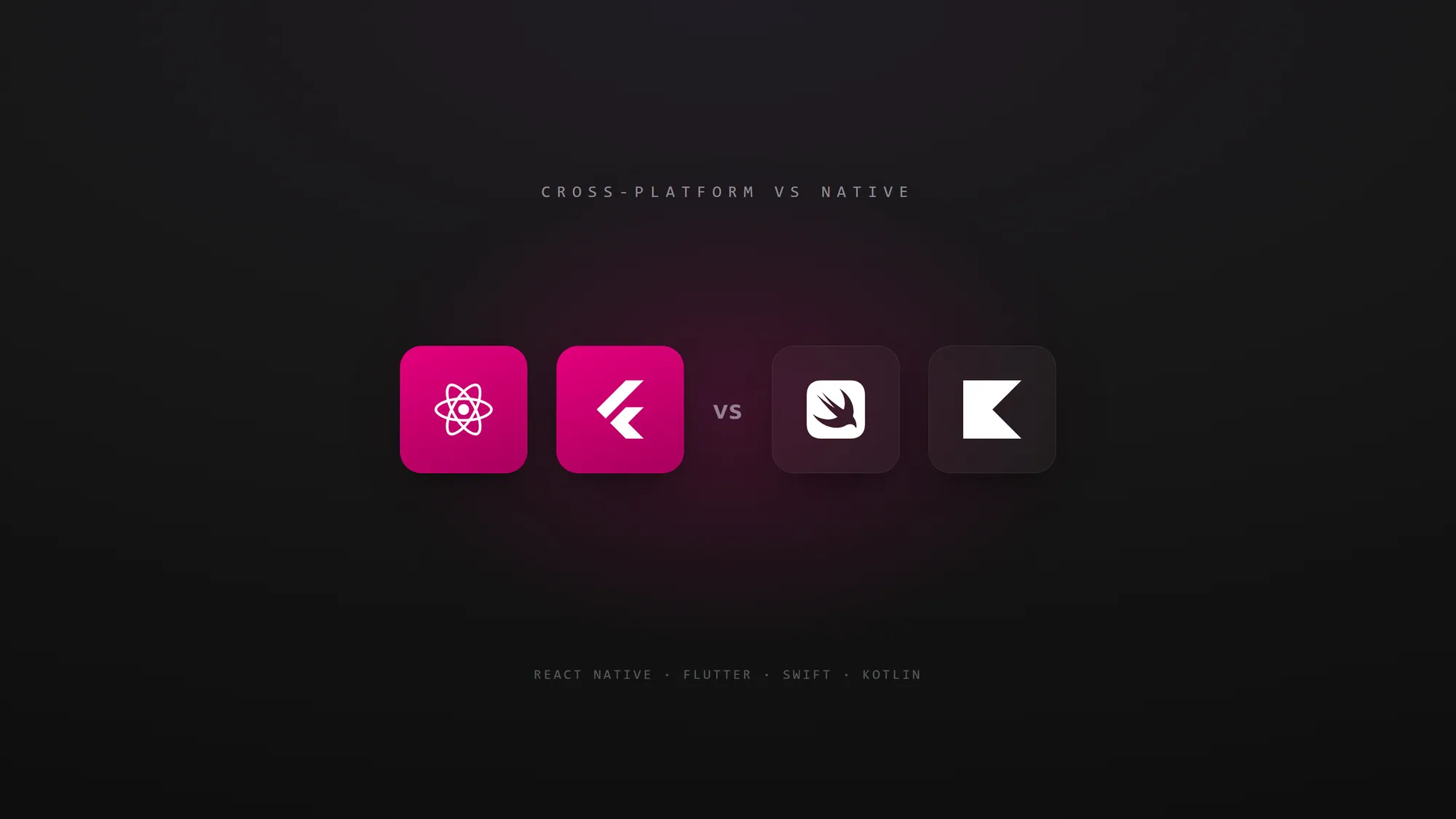
Native vs cross-platform. Native (Swift for iOS, Kotlin for Android) gives the best performance and deepest access to device features, but it means two separate codebases. Cross-platform (React Native, Flutter) ships one codebase to both stores, which is usually faster and cheaper for a first version. Most MVPs don't need native's extras, so cross-platform tends to win on speed to market — we go deeper on the tradeoff in cross-platform vs native.
Who builds it. You need engineering capacity in one of three forms:
| In-house | Freelancers | Agency / nearshore | |
|---|---|---|---|
| Control | Highest | Medium | High |
| Speed to start | Slow (hiring) | Fast | Fast |
| Cost | Highest (salaries, benefits) | Lowest | Middle |
| Coordination | You manage daily | You manage tightly | Team comes pre-built |
| Best when | App is your core product, long-term | Tiny, well-defined scope | You want a ready crew without hiring |
In-house gives the most control but is slow and expensive to staff. Freelancers are cheap but hard to coordinate across a real product. An agency or nearshore software development gives you a crew that already works together, in your time zone — which is why many US teams ship their first app this way. Cost varies with scope, not a fixed rate; see mobile app development cost for how the number is built up.
4. Design the UX/UI
With scope locked, design the experience before building it. Start with the flows, not the pixels: map the screens a user moves through to complete the core job, and keep that path as short as possible. A wireframe — boxes and arrows, no color — is enough to catch a clumsy flow early, when fixing it costs nothing.
Then layer on the visual design: a consistent look, readable typography, and the platform conventions users already expect (iOS and Android each have their own). Turn the screens into a clickable prototype and put it in front of a few real users. The goal isn't a pretty deck — it's catching confusion before it's baked into code.
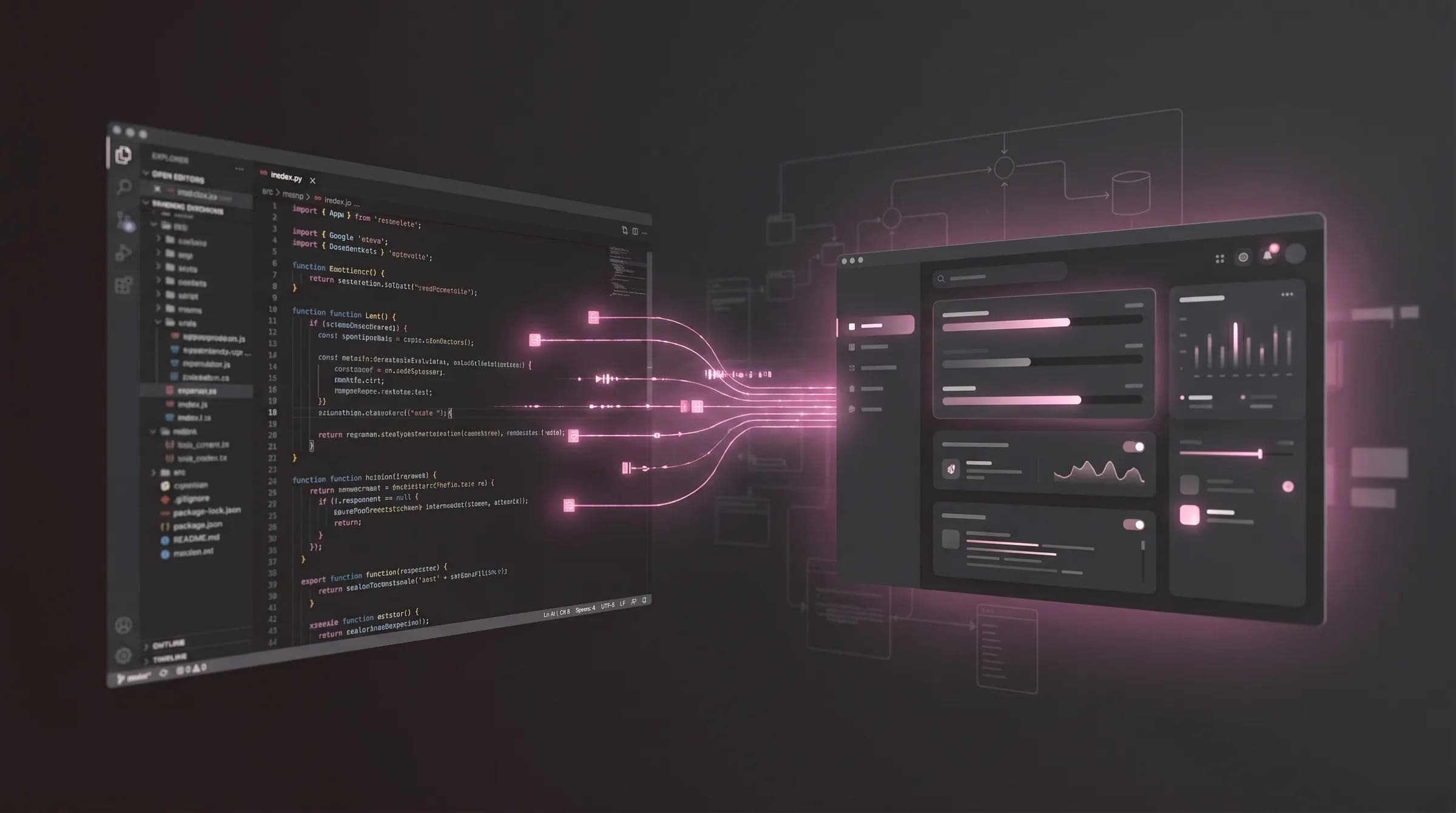
5. Build (frontend, backend, integrations)
Now you build. A mobile app is three parts working together:
- Frontend — what runs on the device: the screens, navigation, and interactions users touch.
- Backend — what runs on a server: accounts, data storage, business logic, and the API the app talks to. Even a simple app usually needs one for auth and data that syncs across devices.
- Integrations — the third-party services you plug in instead of building: payments, push notifications, maps, analytics, sign-in providers.
Build in short cycles against the MVP list, shipping a working slice of the core job first rather than half-finishing many features. This is the work our mobile app development team does end to end — but the discipline holds whoever builds it: stay on the must-have scope and resist the "while we're in here…" creep.
6. Test and QA on real devices
Test as you build, not at the end. Two layers matter. First, functional QA: does each feature do what it's supposed to, including the messy paths — bad input, dropped connection, a half-finished action? Second, real-device testing: emulators miss things, so check on actual phones across a range of screen sizes, OS versions, and both platforms if you're shipping to both.
Recruit a handful of beta testers through TestFlight (iOS) and Google Play's testing tracks (Android). Real users on real devices surface the bugs and confusions your team stopped seeing weeks ago. Fix what blocks the core job before launch; log the rest for later.
7. Launch to the App Store and Google Play
Shipping means clearing each store's gate. Both Apple's App Store and Google Play require store listings — name, description, screenshots, icon — plus a privacy policy and disclosures about what data you collect. Apple reviews every app before it goes live, and a rejection on the first try is normal; read the guidelines and budget time for a round or two.
Set up developer accounts early (they aren't instant), prepare the listing assets while the app is still in QA, and plan a soft launch — release to a small audience or region first — so you catch real-world issues before a wider push. Launch day is a milestone, not the finish line.
8. Measure, iterate, and maintain
The first version is a hypothesis. Now you find out if it was right. Instrument the app with analytics before launch so you can see what users actually do: where they drop off, which features they use, whether they come back. Pair the numbers with direct feedback — reviews, support messages, a quick in-app survey.
Then iterate. Feed what you learn back into the "nice-to-later" list, reprioritize, and ship updates in cycles. Maintenance is ongoing, not optional: OS updates, new device sizes, security patches, and library upgrades all need attention, or the app quietly rots. A shipped app is a living product, and the build never fully ends — it just shifts from "launch it" to "make it better."
The bottom line
You don't need a perfect spec or a big team to start — you need a validated problem and a ruthlessly small MVP. Walk the eight steps in order: validate, scope, choose your approach and team, design the flows, build the core, test on real devices, clear the store reviews, then measure and iterate. The teams that ship aren't the ones with the most features planned; they're the ones who cut scope hard, get a working core in front of real users fast, and let what they learn decide what to build next.