





















Lowering your cost per acquisition means getting more conversions for the same ad budget — or the same conversions for less. You do it by fixing conversion tracking, cutting wasted spend, tightening targeting, and improving the page people land on after they click. Most of the win is in clean data and the post-click experience, not bidding tricks.
CPA is the number that decides whether paid media makes you money or quietly drains it. Below is the order we work through it with US clients — highest leverage first.
What is cost per acquisition?
Cost per acquisition (CPA) is total ad spend divided by conversions. Spend $5,000 to win 50 customers and your CPA is $100. It only means something when a "conversion" is a real outcome you care about — a qualified lead or a sale — not a click, a page view, or a vanity event. Fix that definition first and half of your CPA problem usually disappears.
Start with tracking, not bidding
The single biggest reason CPA stays high is that the platform is optimizing toward the wrong signal. If Google or Meta is told a newsletter signup and a $10,000 deal are the same "conversion," it will happily buy you cheap signups and call it a win.
Before you touch a bid:
- Track real conversions — purchases, qualified leads, booked calls — not soft micro-events.
- Send values back. Pass revenue or lead value so the algorithm optimizes for profit, not volume.
- Fix attribution leaks. Server-side tracking and clean tags stop you from paying for conversions you can't even see.
Clean data is what makes every later step actually work.
The levers that move CPA
There are only a handful of real levers. Pull them in this order — top rows are cheaper to fix and move CPA the most.
| Lever | What you change | Effort | CPA impact |
|---|---|---|---|
| Conversion tracking | Optimize toward revenue, not clicks | Low | Highest |
| Landing page / CRO | Make more clicks convert | Medium | High |
| Wasted-spend cuts | Kill low-intent keywords & audiences | Low | High |
| Targeting & audiences | Reach buyers, not browsers | Medium | Medium |
| Creative & ad copy | Raise relevance, lower CPC | Medium | Medium |
| Bidding strategy | Match bids to value | Low | Lower than it looks |
Notice bidding is last. Smart bidding only works once the data feeding it is clean and the page it sends traffic to actually converts.
- Fix tracking — track real conversions and send values back so the platform optimizes for profit, not clicks.
- Cut wasted spend — add negatives, exclude junk placements, and apply the 3x kill rule.
- Fix the page — message match, speed, and one clear action turn more clicks into customers.
- Tighten targeting and creative — feed quality signals and test genuinely different angles.
- Tune bidding last — match bids to value once the data and page are already clean.
Cut the wasted spend first
Most accounts waste 20–40% of budget before any clever optimization. The fastest CPA drop is usually subtraction:
- Search-term and placement reports. Add negative keywords and exclude junk placements where spend goes but conversions don't.
- The 3x kill rule. If a keyword, ad set, or audience has spent 3x your target CPA with zero conversions, pause it.
- Stop double-paying. Branded search and remarketing often buy people who'd convert anyway — size them deliberately, don't let them flatter your CPA.
Fix the page after the click
You can buy a perfect click and still lose the customer on a slow, off-message landing page. Page experience is where a lot of "high CPA" problems actually live:
- Message match. The headline on the page should echo the ad that earned the click.
- Speed. A slow page bleeds conversions on mobile — every second costs you.
- One clear action. Remove distractions and friction from the form or checkout.
A 1% lift in conversion rate lowers CPA exactly as much as a 1% cut in clicks — and it's usually easier to win.
Tighten targeting and creative
Once tracking is clean and the page converts, sharpen who sees the ad and what they see. Feed the platform high-quality audience signals, test a few genuinely different creative angles rather than ten near-identical ones, and let relevance pull your cost-per-click — and therefore your CPA — down.
CPA vs ROAS: read them together
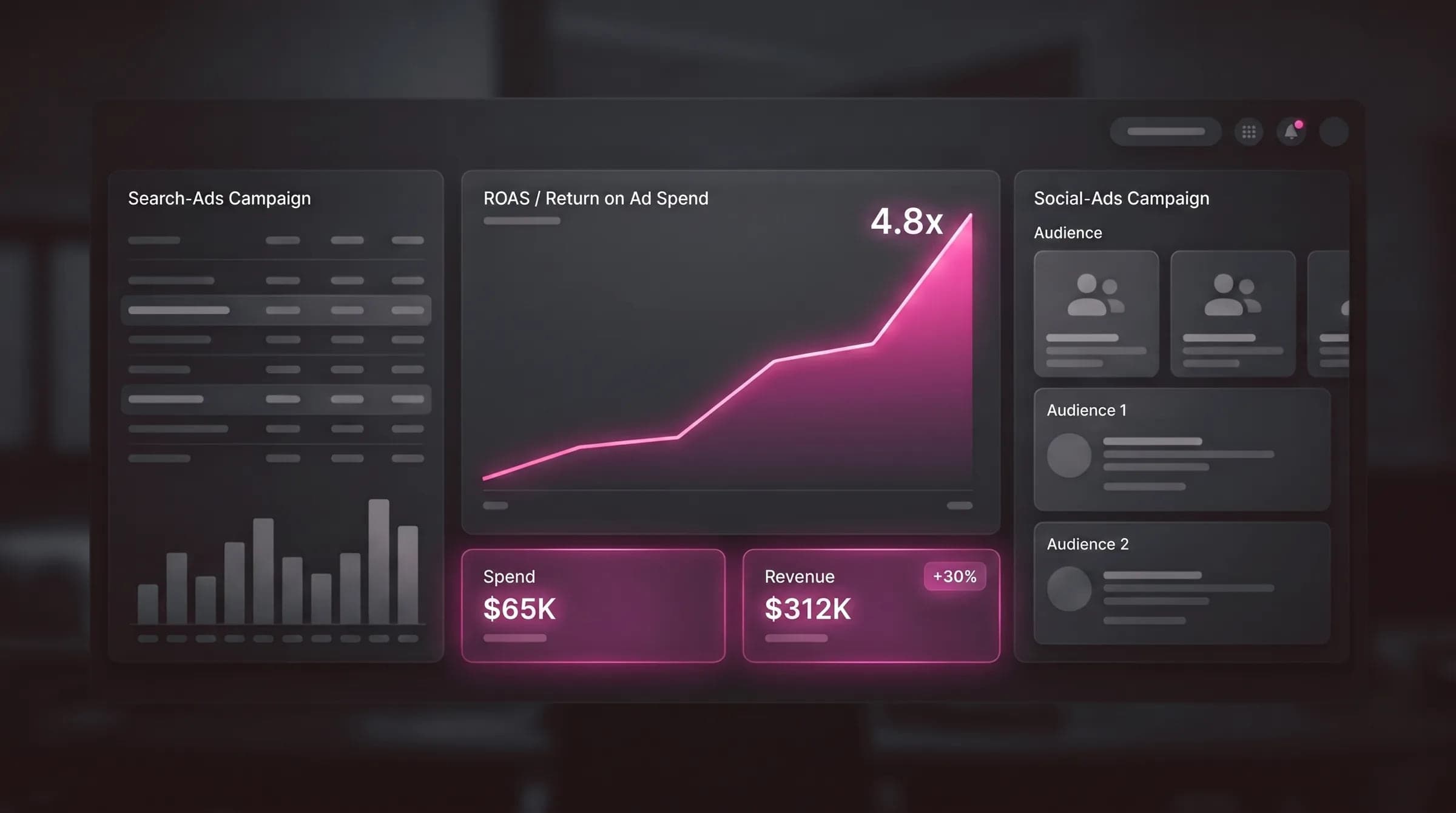
CPA and ROAS answer different halves of the same question, and you need both to reduce cost per acquisition without hurting profit. CPA tells you what one customer costs to buy; ROAS (return on ad spend) tells you how much revenue each ad dollar returns. A campaign can show a low CPA and still lose money if the customers it buys are cheap and low-value — and a higher CPA can be your most profitable channel if those customers spend far more. Lower your CPA where it also holds or grows ROAS; be suspicious of any CPA drop that quietly drags ROAS down with it.
Don't chase a low CPA blindly
A suspiciously low CPA can mean low-quality leads that never close. Always read CPA next to downstream numbers — close rate, ROAS, and lifetime value — so you're buying customers who are actually worth more than they cost. Cheap and profitable aren't the same thing.
How a PPC management partner lowers your CPA
The levers above are simple to list and relentless to run — search-term reports, negatives, the 3x kill rule, tracking hygiene, and page tests don't fix themselves once and stay fixed. That ongoing discipline is what PPC management actually buys you. A good PPC management partner watches the account daily, catches wasted spend before it compounds, and keeps the data clean so smart bidding optimizes toward profit instead of noise — which is exactly how you reduce cost per acquisition month over month rather than in one lucky cleanup.
The catch is incentives: a partner paid a percentage of your ad spend has no reason to lower your CPA, because a leaner, tighter budget shrinks their fee. A flat management fee flips that — the partner is rewarded for making each dollar work harder, not for growing the budget.
How WeEvolveIT lowers CPA
This is the core of our paid media service: we optimize for revenue and cost per acquisition, not clicks and impressions. As a nearshore team in Monterrey, Mexico working full US business hours, we adjust campaigns in real time instead of on an overnight delay. We charge a flat management fee, not a percentage of ad spend — so our incentive is to lower your CPA, not grow your budget — and you keep full ownership of your Google Ads and Meta accounts and data. Landing-page and conversion-tracking work is included, because that's where most of the CPA win lives.
The bottom line
To lower cost per acquisition, work top-down: fix tracking so you optimize for real revenue, cut wasted spend, improve the page after the click, then refine targeting and creative — and treat bidding as the last lever, not the first. Judge every change against profit, not against a cheaper-looking click.