


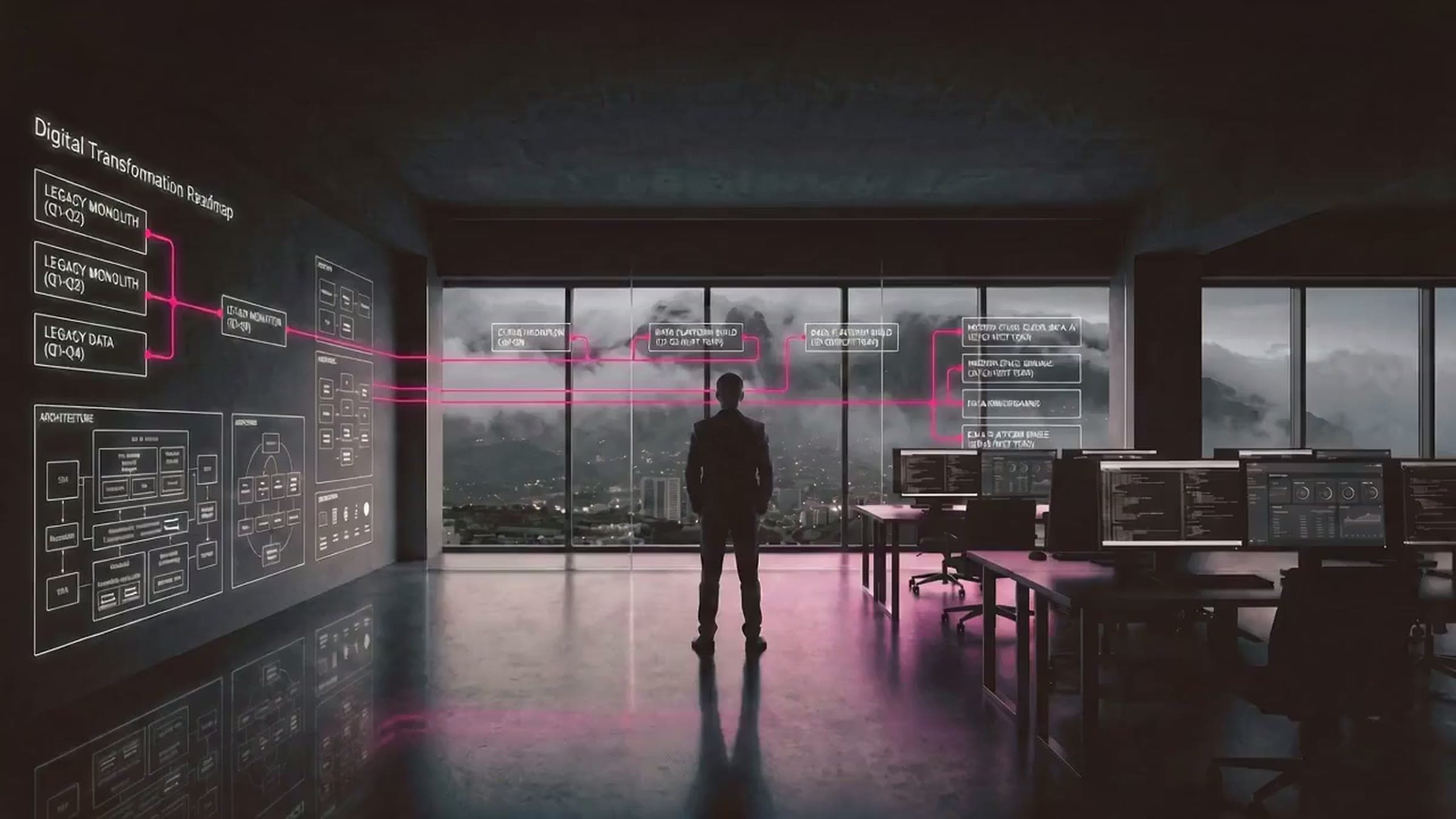




The custom software development process — also called the software development life cycle (SDLC) — is the path that turns a business idea into live, maintained software, typically six phases: discovery, design, build, test, deploy, and evolve. Each phase has clear deliverables and a sign-off, so scope is validated before code is written and the product ships in small, testable increments rather than one risky release.
Most custom builds don't fail on code. They fail on unclear requirements, scope creep, and slow feedback loops — and the process below exists to de-risk exactly those failure modes.
What is the custom software development process?
Custom software development is building an application shaped to your exact workflow instead of bending your business around off-the-shelf tooling. The process is the repeatable sequence a team follows to deliver it: from understanding the problem, to designing a solution, to shipping and maintaining it in production. A disciplined process is what separates software you own and can evolve from a half-finished build you have to rescue.
The phases are the same whether you build in-house, onshore, or with a nearshore partner in Mexico — what changes is how tightly the team can collaborate through each one.
The 6 phases, step by step
| Phase | What happens | Key deliverable |
|---|---|---|
| 1. Discovery | Goals, users, scope, success metrics, risks | Requirements + roadmap |
| 2. Design | UX/UI flows, system architecture, tech stack | Prototypes + architecture |
| 3. Build | Iterative development in short sprints | Working increments |
| 4. Test | QA, automated tests, security, UAT | Verified, release-ready code |
| 5. Deploy | Release to production, monitoring, handover | Live product + docs |
| 6. Evolve | Maintenance, fixes, new features | Ongoing roadmap |
- Discovery — turn a vague brief into concrete requirements, scope, and risks.
- Design — UX/UI flows plus the architecture, data model, and tech stack underneath.
- Build — iterative development in short sprints, each a working, shippable increment.
- Test — automated tests, manual QA, security checks, and user acceptance testing.
- Deploy — release verified code to production with monitoring and a clean handover.
- Evolve — bug fixes, security patches, performance work, and new features over time.
1. Discovery and requirements
The cheapest place to fix a problem is before any code exists. Discovery turns a vague brief into concrete requirements: who the users are, what success looks like, which integrations matter, and where the risks sit. Skipping it is the single most common reason custom projects overrun.
2. Design and architecture
Design covers two layers: the UX/UI your users will touch, and the architecture underneath — data model, APIs, hosting, and tech stack. Clickable prototypes let you validate the experience before it's expensive to change, and the architecture decisions made here determine how well the product scales later.
3. Build (iterative development)

Development happens in short sprints, each producing a working, shippable increment rather than a months-long black box. This is where agile earns its keep: you see real software early, give feedback, and adjust scope while it's still cheap to do so. You should also own the code from day one — every commit is yours.
4. Testing and QA
Quality is built in, not bolted on at the end. Each increment goes through automated tests, manual QA, security checks, and user acceptance testing (UAT) so bugs are caught when they're small. Defining acceptance criteria up front is what makes "done" an objective fact instead of an argument.
5. Deployment
Deployment moves verified code into production with monitoring, rollback plans, and a clean handover of documentation and access. Mature teams automate this through CI/CD so releases are routine and low-drama rather than all-hands events.
6. Evolve (maintenance and iteration)
Launch is the start, not the finish. Real products need bug fixes, security patches, performance work, and a steady stream of new features as the business learns. Budgeting for this phase up front is the difference between software that compounds in value and software that quietly rots.
Agile vs waterfall: which process fits
Waterfall runs each phase once, in strict order, and only reveals working software near the very end — fine when requirements are genuinely fixed, risky when they aren't. Agile loops phases 3 through 5 in short sprints, shipping usable software continuously and folding feedback in as it arrives.
Because custom software requirements almost always shift during a build, most modern teams — including ours at WeEvolveIT — run an agile, sprint-based process. It trades the illusion of a fixed plan for the reality of steady, correctable progress.
How nearshore keeps the process tight
Every phase above depends on feedback loops — and feedback loops depend on overlapping hours. A blocker raised at 10am that's resolved by 10:30 keeps a sprint moving; the same blocker on a 12-hour offset waits until tomorrow and quietly costs a day. That async penalty compounds across discovery sessions, design reviews, and sprint demos.
This is where a nearshore team in Monterrey, Mexico has a structural advantage for US companies: shared business hours mean stand-ups, UAT, and design sign-offs happen live, not on a 24-hour delay. The process doesn't change — it just runs at full speed. This is exactly how our custom software development service is delivered: senior nearshore engineers, your time zone, and the code and IP yours to keep. That nearshore model is our nearshore software development service.
Two decisions sit just upstream of this process: what a build will cost and whether to build at all. If you're still scoping the budget, see how custom software development cost breaks down; if you're weighing custom against a packaged tool, our build vs buy software guide frames that call before you commit to the process here.
The bottom line
The custom software development process is six phases — discovery, design, build, test, deploy, evolve — run iteratively so scope is validated early and the product ships in testable increments. Get discovery and feedback loops right and most failure modes disappear. For US teams, a nearshore partner that shares your hours is what keeps every phase moving at the pace the process was designed for.