





















Good web design in Phoenix is built for the worst moment of your customer's day: the air conditioner stops at 4 p.m. in July, and somebody with a phone in one hand needs a company that answers. The site has to load in a couple of seconds, show a number to tap and deliver the form to a person. The same logic applies to a clinic, a resort or a chip supplier.
Three tests a Phoenix website has to pass
The urgent visitor. Phoenix recorded 122 days at or above 100 degrees in 2025, 37 of them at 110 or more, according to the National Weather Service, which ranks the year as the second warmest in the city's history. On those days a broken air conditioner is an emergency, and the customer picks whichever company can be reached first.

A market that keeps arriving. The Phoenix metro area added 59,065 residents between July 2024 and July 2025, the fourth-largest gain in the country, and reached 5,228,938 people, by Census Bureau estimates. A new resident has no plumber, dentist or roofer yet, and no neighbor to ask. The website makes the first impression.
Two languages. In the city of Phoenix, 462,608 of 1,571,408 residents age 5 and older speak Spanish at home, about 29%, in the Census Bureau's 2024 American Community Survey.
Find the problem first: one free check for each
| What you notice | Free first check | What fixes it |
|---|---|---|
| The page is slow on a phone | The free SEO and speed check. Google's targets: main content in 2.5 seconds, a response to a tap in 200 milliseconds | Smaller photos, fewer third-party scripts, or a rebuild when a heavy page builder is the cause |
| Forms never arrive | Send a test request from your phone and time how long it takes to reach someone | Forms that write to a CRM or shared inbox, with an alert to staff |
| Your company does not show up on Google | The Page indexing report in Google Search Console | One page per service and per area served, and a Google Business Profile that matches the site (local SEO guide) |
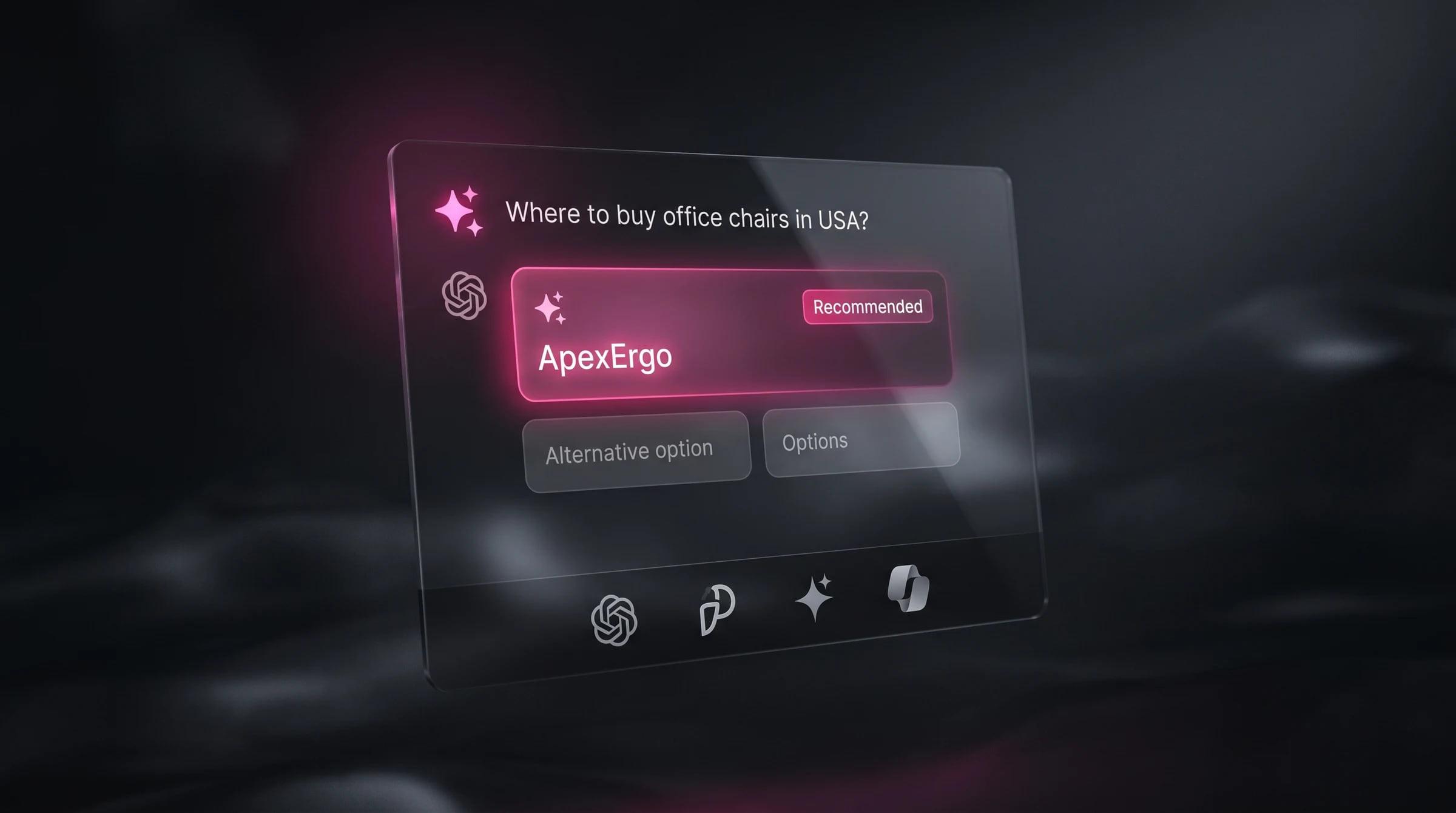
| ChatGPT never names you | The free AI visibility check | Direct answers in text, plain facts about services and areas, and structured data |
| The vendor has been "almost done" for months | Ask for the staging link and the list of what is finished | Recover the domain and accesses first, then restart with dated milestones |
Web design in Phoenix by type of business
What kind of business do you run?
HVAC, roofing, pool or solar contractor
122 days at or above 100 degrees in Phoenix in 2025
Who buys: a homeowner with a problem that cannot wait, on a phone, often outside office hours.
What usually goes wrong: the phone number is buried in a menu, the service area is never stated, and the request form goes to an inbox nobody opens on a Saturday.
What to do: a tap-to-call button on every page, one page per service and per city served, a short form that alerts whoever is on call, and financing or maintenance plans in text. Rebuild in the cooler months, not in July.
Semiconductor or advanced manufacturing supplier
Fourth-largest U.S. metro for semiconductor manufacturing employment
Who buys: engineers and purchasing teams at chipmakers and their contractors. The Greater Phoenix Economic Council counts more than $135 billion in semiconductor investment from 1949 to 2024 and ranks the region fourth in the country for semiconductor manufacturing employment.
What usually goes wrong: a three-page brochure site, with capabilities and quality certifications locked inside PDFs.
What to do: one page per capability, written as text with tolerances, materials and certifications, plus a quote form that accepts drawings securely and logs every request.
Medical, dental or specialty practice
436,100 education and health services jobs in metro Phoenix, October 2026
Who buys: patients choosing a provider, many of them new to the area. Education and health services employ 436,100 people in the metro, by the Bureau of Labor Statistics' preliminary October 2026 count, so there is no shortage of alternatives.
What usually goes wrong: no online booking, insurance plans nobody can find, and one generic page for several locations.
What to do: booking that works on a phone, a page per location and per specialty, and a clear answer to "do you take my insurance?". Forms that collect health information fall under HIPAA: ask where the data is stored and who can read it.
Resort, golf course or tour operator
47.7 million visitors to metro Phoenix in 2025
Who buys: travelers planning from another state or country. Visit Phoenix counts 47.7 million visitors in 2025, about 1.7 million of them international, and more than 185 golf courses competing for them.
What usually goes wrong: bookings that depend on third-party platforms, rates shown only as an image, and nothing about what the weather is like in the month the guest is considering.
What to do: a booking path on your own site, rates and tee times in text, and pages that answer planning questions by month.
Real estate, home builder or property manager
59,065 new residents in metro Phoenix in one year, fourth among U.S. metros
Who buys: people relocating, who compare neighborhoods and builders from another city before they visit.
What usually goes wrong: slow listings, community pages with nothing on schools, commute or utility costs, and leads that land in one agent's personal email.
What to do: fast listings, a page per community with the answers a newcomer needs, and every inquiry in a CRM.
Eight points to compare web design proposals
- It starts from your numbers. What a new customer is worth and what counts as a lead, before any mockup.
- Scope in writing. Pages, features, integrations, languages and what is excluded.
- Dated milestones with a preview link. Your company reviews real pages every week or two, not a finished site at the end.
- Ownership. Domain, hosting, code and analytics registered in your company's name from the first day.
- A speed target for phones, as a number measured on your real pages (see the technical SEO checklist).
- Who writes the content, in both languages, and who supplies the photos.
- The launch plan. Old addresses redirected, forms and call tracking tested before the switch.
- After launch. Who monitors the site, how fast a failure is answered and the monthly cost.
Not sure you need a custom build? See custom website vs template.
What a website costs and what it depends on
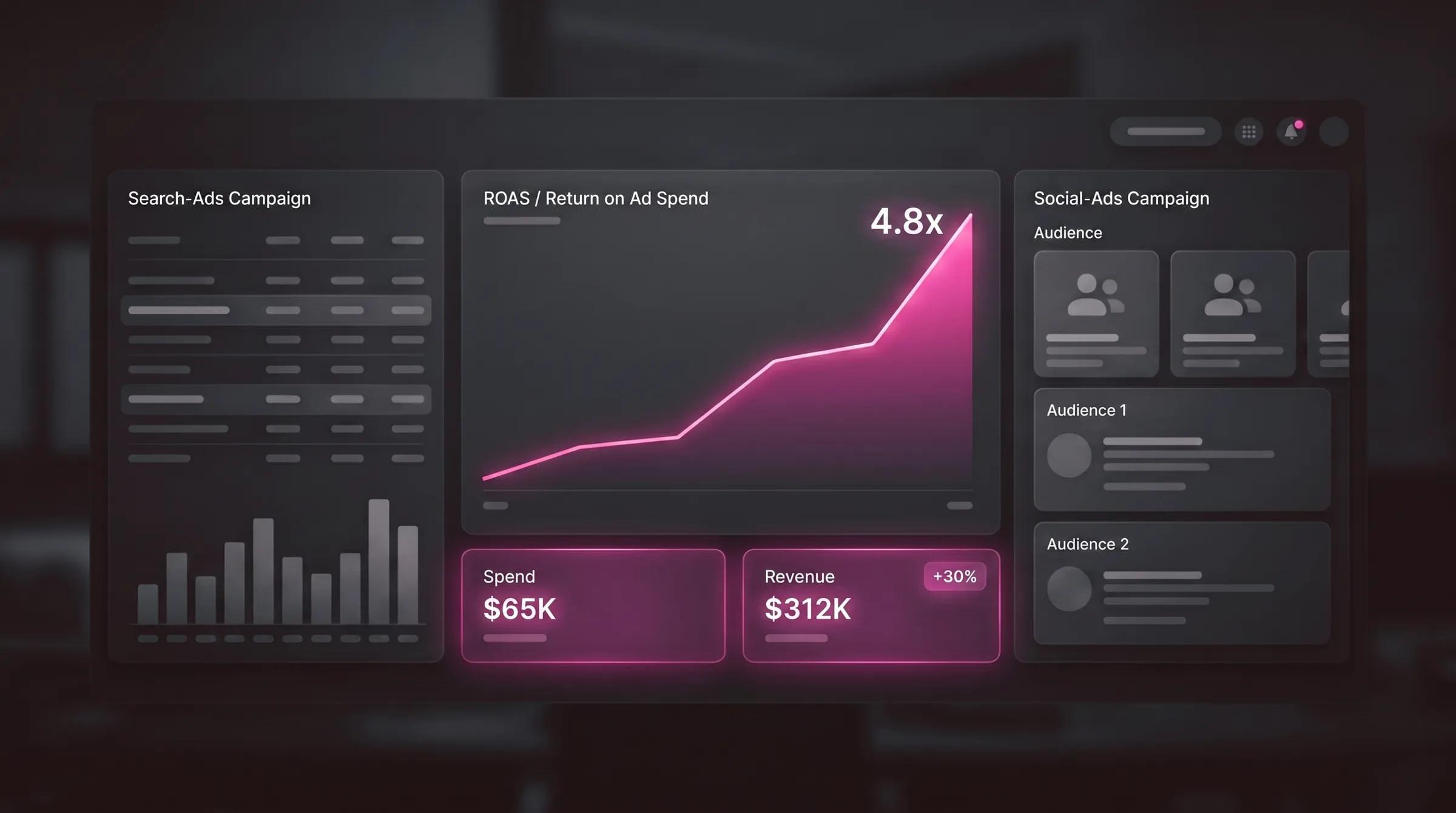
Start from the return, not the price: what one new customer is worth to your company and how many more the site has to bring to pay for itself. As a reference, a custom website with WeEvolveIT starts from $500 USD and goes up with scope:
- Pages. Five pages is a different project from a page per service, city and location.
- Features. Booking, quote forms with file uploads, calculators and customer portals.
- Integrations. Connecting to a CRM, scheduling tool or field service system is often the largest item.
- Content and languages. Writing, photography and a real Spanish version.
- Care after launch. Hosting, monitoring and updates.
The guide to custom website cost breaks each one down.
A remote team, one hour ahead all year
WeEvolveIT has no office in Phoenix. It works remotely, by video, from its headquarters in Monterrey, Mexico. Arizona does not observe daylight saving time and Monterrey keeps the same time all year, so Monterrey is one hour ahead of Phoenix in every season.
Every WeEvolveIT project starts with a return on investment analysis of the process or area to improve: what the problem costs your company today, what the site can earn or save, and how long until it pays back. The scope is set on those numbers, with competitive pricing and delivery at the level of a global firm, from a five-page site to a platform connected to your operations. See the web development service, or start with the free SEO check and AI check. If your industry is not listed above, the AI business check gives a free diagnosis.