



















PPC stands for pay-per-click — a type of online advertising where you bid to place ads on platforms like Google and Meta and pay only when someone actually clicks. Instead of paying for the ad slot, you pay for the visit. It's the fastest way to buy visibility and put your business in front of buyers on demand.
That speed is the whole appeal. SEO compounds over months; a PPC campaign can be live and driving traffic this afternoon. The catch is that the meter runs on every click — so whether PPC pays off comes down to math, not magic.
What is PPC and how does it work?
PPC runs on an auction. When someone searches a term or fits an audience, advertisers bid for the slot, and the platform ranks them by bid and ad quality. You don't pay to enter the auction — you pay the cost-per-click (CPC) only when your ad is clicked.
The two giants of PPC are Google Ads (intent — people actively searching) and Meta Ads on Facebook and Instagram (demand — people who match an audience). TikTok, LinkedIn, and Amazon round out the mix. This is the core of what teams call paid media — buying attention you can switch on, measure, and scale.
What does PPC actually cost?
There are two separate costs hiding inside "PPC cost," and confusing them is how budgets get wasted:
| Cost | What it is | Who you pay | Typical range |
|---|---|---|---|
| Ad spend | The auction cost per click | Google / Meta | < $1 to $50+ per click |
| Management | Building and optimizing campaigns | Agency or in-house | Flat fee or % of ad spend |
Ad spend depends on your niche — a local service click might cost a dollar; a legal or B2B keyword can run $50 or more. Management is where the model matters most. A percentage of ad spend rewards the agency for making you spend more. A flat monthly fee ties their pay to your results, not your budget — which is the model we use, because it keeps the incentive pointed at your ROI instead of your invoice.
Is PPC worth it? PPC vs SEO
PPC is worth it when each customer is worth more than what you pay to win them — and when you can actually track that math. It's not a replacement for SEO; it's the other half of the funnel.
| PPC | SEO | |
|---|---|---|
| Speed to results | Instant | Months |
| Cost model | Pay per click, always on | Compounds, no per-click cost |
| Traffic when you stop paying | Stops | Keeps coming |
| Best for | Results now, testing, scaling | Long-term, owned visibility |
The honest answer: PPC is rented traffic, SEO is owned traffic, and most growing businesses run both. Ads buy visibility now while SEO compounds underneath. The mistake is treating them as either/or.
Why most PPC wastes budget
Plenty of PPC spend disappears for avoidable reasons — and knowing them is how you de-risk a campaign before the first dollar goes out:
- Optimizing for clicks, not revenue. Clicks and impressions look busy; CPA and ROAS pay the bills.
- Broken tracking. If conversions aren't measured correctly, you're flying blind and the platform optimizes toward noise.
- Sending ads to a slow or weak landing page. Great ads, bad page — the spend converts at a fraction of what it should.
- No account ownership. If an agency holds your Google Ads or Meta account, your history is hostage the day you leave.
How you fix these is the difference between a PPC partner and a PPC vendor. Conversion tracking, a fast page, and you owning your own accounts aren't extras — they're the baseline.
How PPC is measured
Forget clicks as the scoreboard. The two numbers that decide whether PPC works:
- CPA (cost-per-acquisition): what you pay to land one customer. Lower is better, as long as quality holds.
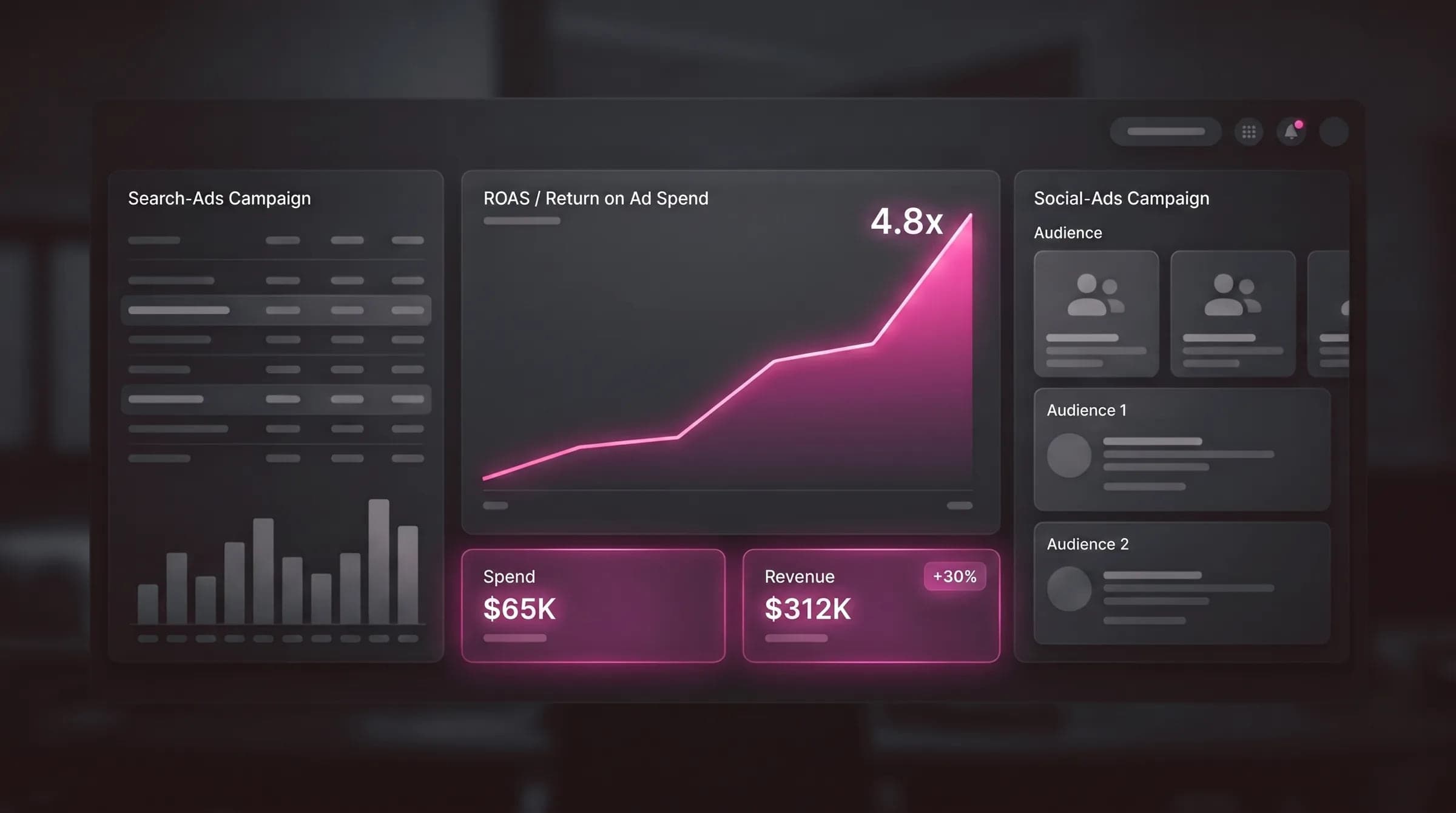
- ROAS (return on ad spend): revenue earned per dollar spent. A 4:1 ROAS means four dollars back for every one in.
If a campaign can't tie spend to CPA and ROAS, it isn't being managed — it's being guessed at.
What does a PPC agency do?
Running PPC well is a full-time job, which is why most businesses hand it to a specialist. PPC management — the ongoing work of building, running, and optimizing your campaigns — is what a PPC agency actually sells. A good one handles keyword and audience research, account structure, bidding, ad creative, conversion tracking, and reporting, and it owns the post-click experience (landing pages and CRO) too. The job isn't to generate clicks; it's to turn ad spend into customers at a cost-per-acquisition you can live with. If an agency talks about impressions and "engagement" instead of CPA and ROAS, it's selling activity, not management.
How WeEvolveIT runs PPC
Our paid media service is a nearshore team in Monterrey, Mexico, running Google and Meta campaigns for US businesses on shared time zones — bilingual, senior, and leaner than a US agency retainer. Our wedge is simple: we optimize for revenue, not vanity clicks, you own your accounts and data, we charge a flat fee instead of a cut of your spend, and we pair PPC with SEO so you buy visibility now while organic compounds. Landing pages and conversion tracking come included, because ads to a broken page are just a faster way to lose money.
The bottom line
PPC is the fastest way to buy traffic — you pay per click, you can be live today, and you can scale what works. But the hourly thrill of "we're getting clicks" means nothing without CPA and ROAS behind it. Get your tracking right, own your accounts, judge results by revenue, and PPC stops being a gamble and starts being a lever. Run it alongside SEO, and you've got the full funnel: visibility now, and visibility that compounds.