
















An AI customer service agent is software that uses an AI model to understand a customer's request, look up the facts in your systems, take allowed actions (check an order, update an address, open a return) and either resolve the case or hand it to a person with the full context. Unlike a rules chatbot, it works inside your help desk, CRM, order system and knowledge base, under permissions, limits and human approval for anything sensitive.
Interest is growing quickly. In the United States, "ai customer service agent" is searched about 1,600 times a month, up 182% in the last three months against the three before, "ai customer service" about 4,400 times a month, up 41%, and "ai agent for customer service" about 720 times a month (WeEvolveIT analysis of Google search data, November 2026). Most of the first page of Google for the main term is tool roundups and software vendor guides. This guide takes the other side: what your company needs to decide before choosing any tool.
Expectations are high. In a March 5, 2025 press release, Gartner predicted that by 2029, agentic AI will autonomously resolve 80% of common customer service issues without human intervention, leading to a 30% reduction in operational costs. Customers are more cautious: in a Gartner survey of 5,728 customers conducted in December 2023 and published in July 2024, 64% said they would prefer that companies didn't use AI in customer service, and their top concern was that it would become harder to reach a person. A good AI customer service agent has to serve both facts at once.
What is customer support AI?
"Customer support AI" covers several tools that are often sold under the same name. They differ in one thing that matters more than the model behind them: how much they are allowed to do without a person.
- Rules chatbots follow a decision tree or match keywords to canned answers.
- Generative FAQ bots answer questions in natural language from your help center, but take no action.
- Agent assist (also called a copilot for agents) drafts replies, summarizes tickets and suggests articles while a human agent stays in charge of every reply.
- Triage and routing classifies incoming tickets by topic, language, urgency or sentiment and sends them to the right queue.
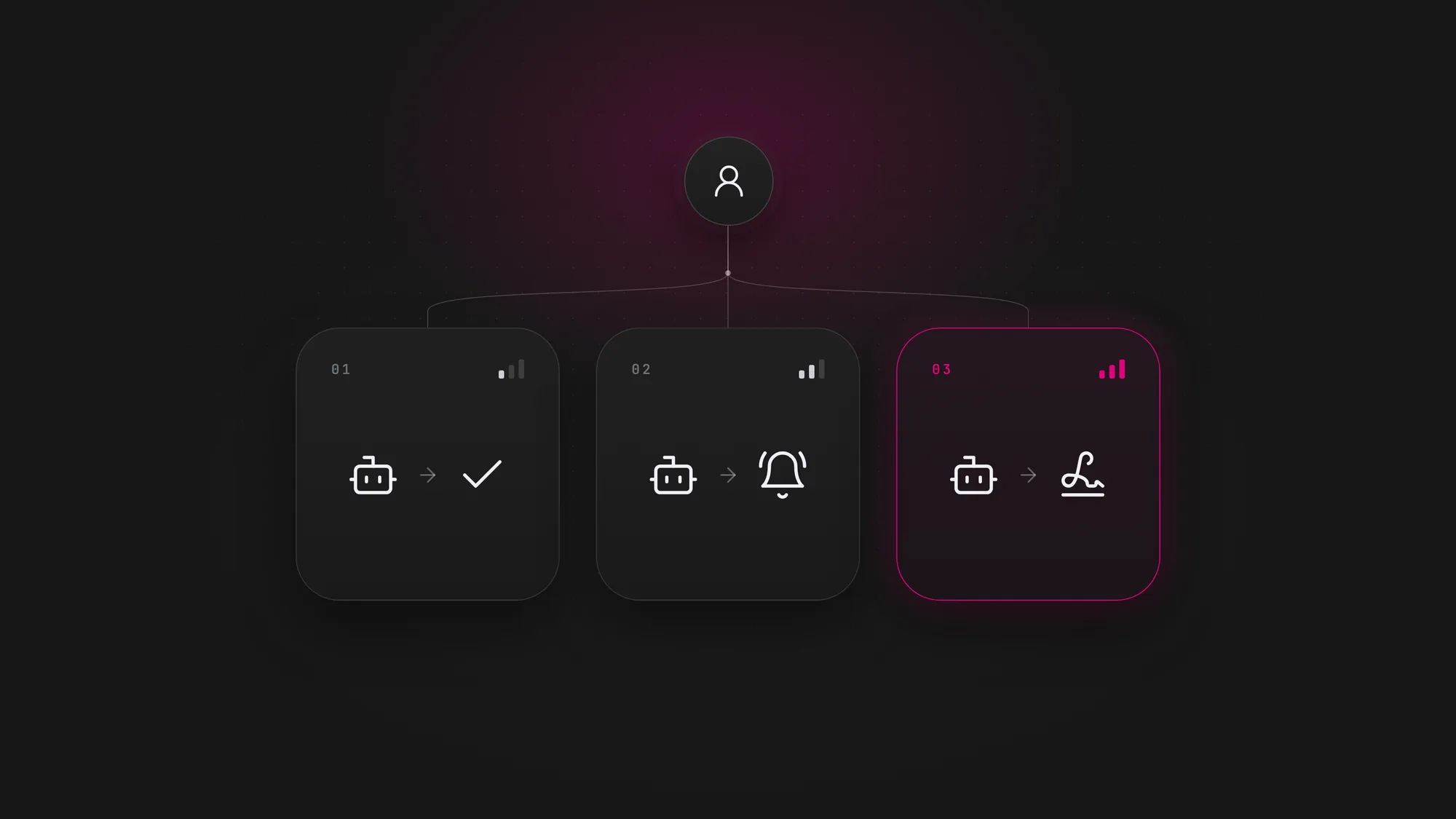
- AI customer service agents take the request from start to finish: they read the case, look up data, take allowed actions and close or escalate.
For the general definition of an agent, see what is an AI agent. This guide focuses on the last category and how it fits with the others, because most support operations end up using two or three of them together.
AI customer service agent vs chatbot vs agent assist
| AI customer service agent | Rules chatbot | Agent assist | |
|---|---|---|---|
| Who replies to the customer | The agent, within its limits | The bot, from fixed answers | A human agent |
| Takes actions in systems | Yes, through scoped tools (orders, CRM, help desk) | Rarely, only in hard-coded flows | No, it suggests; the human acts |
| Handles unexpected wording | Yes, it interprets intent | Poorly, falls back to "I didn't understand" | Yes, but a person decides |
| Escalation | Hands off with a summary and the data it gathered | Transfers, often without context | Not needed, the human is already there |
| Main risk | A wrong action or a wrong answer stated with confidence | Frustrated customers stuck in loops | Low; agents may over-trust drafts |
| Best fit | High volume of routine, checkable requests | Very simple, stable FAQs | Complex or sensitive queues |
| Typical metric | Resolution rate and CSAT on agent-handled cases | Containment rate | Handle time per ticket |
A common and sensible setup is an AI agent on the routine front line, agent assist for the human team that receives escalations, and triage in front of both. For the broader comparison across AI types, see agentic AI vs generative AI vs chatbots.
What an AI customer service agent should resolve, and what goes to a person
The question is not "can the AI answer this?" but "what happens if it answers wrong?". Classify each request type by frequency and by the cost of a mistake.
| Request type | Typical action | Who handles it |
|---|---|---|
| Order status, tracking, delivery window | Read the order and carrier data, reply | Agent alone |
| Policy questions (returns, warranty, shipping) | Answer from the knowledge base, cite the policy | Agent alone |
| Account basics (address change, password reset link, contact details) | Update the record after verifying identity | Agent alone, with identity checks |
| Appointment booking or rescheduling | Check availability, book, confirm | Agent alone |
| Returns and exchanges within policy | Open the return, send the label | Agent, then notify the team |
| Refunds, credits or discounts | Prepare the case and the amount | Agent prepares, a person approves above a set limit |
| Billing disputes, chargebacks | Gather the history | Person |
| Complaints, angry or distressed customers | Acknowledge and summarize | Person, quickly |
| Legal, safety, health or regulatory issues | Stop and escalate | Person, always |
| Anything the agent is unsure about | Ask a clarifying question once, then escalate | Person |
Two rules keep this table honest. First, the limits live in your systems, not only in the prompt: if the order system refuses a refund above a threshold, the agent cannot be talked past it. Second, the customer can always ask for a person and get one, without repeating the story. That second rule speaks directly to the concern customers named in the Gartner survey.
Can AI take over customer service jobs?
AI agents take over the repetitive part of the work: the "where is my order" and "how do I return this" requests that fill queues. What remains for people is the work that needs judgment, authority or empathy: exceptions, disputes, upset customers and decisions about money. In practice, the human role shifts toward handling escalations, reviewing samples of the agent's work, and keeping the knowledge base accurate, because the agent is only as good as the content and data it reads.
How an AI customer service agent connects to your systems
The model is the smallest part of the project. Most of the effort goes into the connections and the rules around them.
- Help desk. The agent reads and writes tickets, adds internal notes, sets tags and statuses, and hands off to the right queue with a summary.
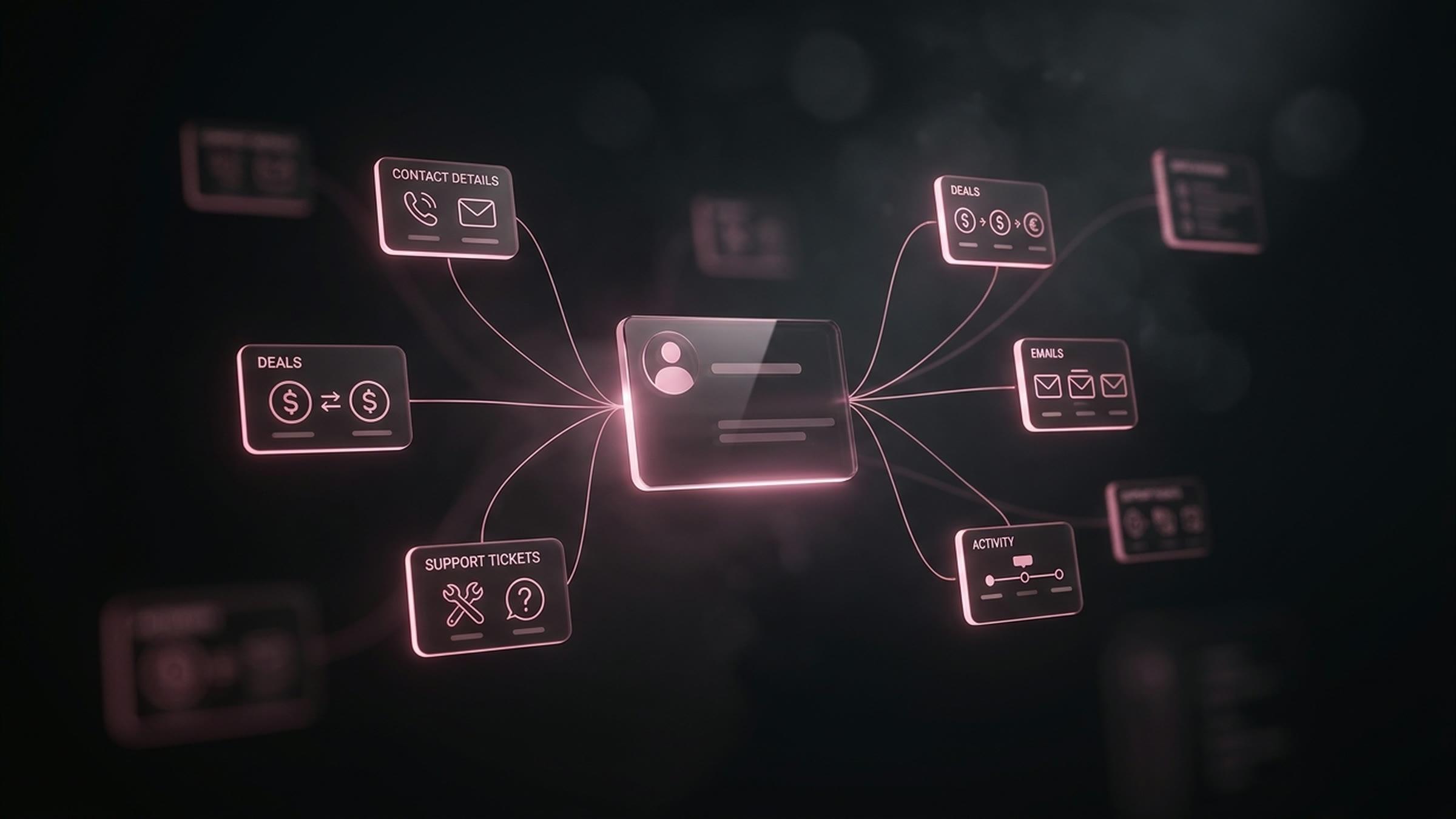
- CRM. It identifies the customer, reads their history and plan, and logs what it did, so the next person sees the full picture.
- Order, billing and logistics systems. This is where real resolution happens: order status, returns, shipping updates and invoices. Each action is a narrow, documented tool ("create return label for order X"), not open access to the system.
- Knowledge base. Policies, product information and procedures, retrieved at answer time. Outdated articles become wrong answers, so every article needs an owner and a review date.
- Channels. Web chat, email, voice and messaging apps. Each channel has its own rules; WhatsApp, for example, has its own message templates and opt-in requirements, covered in how to build an AI agent for WhatsApp.
Three design choices apply to every connection:
- Its own identity, least privilege. The agent gets its own account with only the actions its job needs, never a shared admin login.
- Identity verification before account changes. The agent confirms who it is talking to before reading or changing personal data.
- Logs for every tool call. Each lookup and action is recorded with the ticket, the input and the result, so any case can be reconstructed later.
How to measure an AI customer service agent
Measure the agent with the same discipline as a human team, and always against a baseline recorded before launch. These are standard support metrics; the right target depends on your queue, so set it from your own baseline rather than from someone else's benchmark.
| Metric | What it tells you | Watch out for |
|---|---|---|
| Resolution rate | Share of cases the agent closes correctly without a person | "Closed" is not "resolved"; audit a sample |
| Escalation rate | Share of cases handed to a person | Too low can mean the agent is keeping cases it should not |
| Escalation quality | Whether the handoff included the summary and data the person needed | Agents asking customers to repeat everything |
| CSAT on agent-handled cases | How customers rate the interaction | Compare with CSAT on human-handled cases of the same type |
| Reopen or repeat-contact rate | Whether the answer actually solved the problem | A high resolution rate with a high reopen rate is a warning sign |
| First response and time to resolution | Speed for the customer | Speed without accuracy is not an improvement |
| Cost per resolved case | Model usage, integrations, review time and upkeep, divided by real resolutions | Counting only the build cost |
| Accuracy on audited samples | Whether facts, policies and actions were correct | Reviewing only cases customers complained about |
Containment (conversations that never reached a person) is easy to report and easy to game: a bot that makes escalation hard will "contain" a lot. Pair it with CSAT and reopen rate, or replace it with resolution rate.
Risks and governance
Most failures in AI customer service are predictable, and each one has a known control.
- Confident wrong answers. The agent invents a policy or a delivery date. Control: answers grounded in the knowledge base and live data, with the instruction to escalate when the source does not cover the question.
- Wrong actions. A refund to the wrong order, a change to the wrong account. Control: narrow tools, identity checks, limits enforced in the target system, and human approval above set thresholds.
- Personal data exposure. Customer records sent where your policies do not allow. Control: data minimization, access rules that match those of human agents, and clear terms with any model or platform provider.
- No way out. Customers trapped in a loop. Control: a visible "talk to a person" option that works on every channel and passes the context along.
- Prompt manipulation. A customer tries to get the agent to ignore its rules. Control: permissions that do not depend on the prompt, so a clever message cannot unlock an action the agent was never given.
- Silent drift. A model update, a new policy or a changed API alters behavior. Control: a test set of real cases rerun after every change, and scheduled review of conversation samples.
- No owner. The pilot team moves on and nobody reads the logs. Control: one named owner in the support organization, with a backup.
It is also good practice, and in some places a legal requirement, to tell customers when they are talking to an AI agent. Check the rules for each market where you operate. The full framework for permissions, approvals and audit trails is in AI agent governance.
Ready-made platform or custom AI customer service agent?
Many help desk and CRM vendors now include AI agents, and there are no-code builders that connect to common apps. A custom agent is built for your systems and rules. Neither is better in general; the fit depends on where your data lives and how specific your policies are.
| Choose a ready-made platform when | Choose a custom agent when |
|---|---|
| Your help desk and order systems are standard tools with existing connectors | Orders, billing or customer data live in in-house, legacy or ERP systems |
| Requests are common (tracking, FAQs, returns) | Requests follow complex policies, contracts or regulated steps |
| One or two channels | Many channels, languages or countries with different rules |
| Standard data and audit requirements | Strict data residency, audit or industry rules |
| You want to start quickly and accept the vendor's limits | You need control over every action, log and approval |
Many companies start with the AI features of the platform they already use and move to a custom agent for the cases the platform cannot reach. If you are comparing builders, see the guide to no-code AI agent builders; for budget ranges, see what AI agent development costs.
How to launch an AI customer service agent
- Pick the first queue. Choose a frequent, well-documented, low-risk request type, such as order status or returns within policy, and record its current volume, handling time, CSAT and cost.
- Name the owner and write the rules. One person in support owns the agent; together with IT and security, they define what it may do alone, what needs approval and what always goes to a person.
- Clean the knowledge base. Update the articles the agent will rely on, remove contradictions and give each one an owner and a review date.
- Connect systems with scoped access. Integrate the help desk, CRM and order systems through narrow tools, with the agent's own least-privilege identity and identity checks for account changes.
- Test on real cases. Build a test set from past tickets with known correct outcomes, including tricky and adversarial ones, and measure accuracy before any customer sees the agent.
- Launch with supervision. Start on one channel, with human approval on medium-risk actions, a visible path to a person and review of conversation samples every week.
- Compare and expand. Measure against the baseline, fix what the samples show, and only then add request types, channels or autonomy.
The bottom line
An AI customer service agent is worth it when it resolves routine requests correctly, inside your systems, and hands everything else to a person without friction. The work that decides the result is not choosing a model: it is choosing the right requests, connecting the systems with tight permissions, keeping the knowledge base accurate, and measuring against a baseline.
WeEvolveIT has delivered 1,000+ projects over 15+ years in 17 countries. If your company wants help choosing the first queue, connecting an agent to its help desk, CRM and order systems, or building the approvals and monitoring around it, that is the scope of AI agent development. For how support agents fit with sales, operations and internal copilots at scale, see enterprise AI agents.